
US social media advertising revenue reached $88.8 billion in 2024, up 36.7% year over year, while total internet advertising revenue grew 14.9% (IAB/PwC Internet Advertising Revenue Report, full year 2024). Social platforms absorbed 34.3% of a $258.6 billion digital ad market. Money moving that fast produces one predictable bad habit: teams pick a platform by audience size, then discover a quarter later that they can't produce the creative the format demands or prove the channel sold anything.
Platform choice matters less than the fit between the audience you can reach, the creative your team can produce every week, and the measurement you can defend in a budget review. Those three constraints decide more outcomes than feature lists.
The ten social media advertising platforms below get judged on exactly that:
- Who each one reaches: the slice of the audience your offer can move, not the headline user count.
- What creative it demands: static, vertical video, long-form video, or copy that has to read like a native post.
- Where it loses: the specific situations where a competitor is the better buy.
- What it takes to run well: the setup and tracking work many advertisers skip.
Table of Contents
- 1. Meta Ads Manager
- 2. TikTok Ads Manager
- 3. LinkedIn Campaign Manager
- 4. Pinterest Ads Manager
- 5. Snapchat Ads Manager
- 6. Reddit Ads
- 7. X Ads
- 8. YouTube Ads
- 9. Quora Ads
- 10. Nextdoor Ads
- Social media advertising platforms at a glance
- Picking Your Platform and Running It Well
1. Meta Ads Manager
Meta is the default because it's the only auction where a dentist, a DTC skincare brand, and a B2B software company all buy reach, leads, and sales from one interface. The mechanics of buying in it, campaign objectives, ad sets, and a creative library feeding an auction, became the baseline every other platform gets compared to. US social media advertising revenue hit $64.9 billion in 2023, up 8.7% from 2022 (IAB/PwC Internet Advertising Revenue Report).
What works: one pixel with Conversions API, one broad prospecting campaign, a separate retargeting campaign, and exclusions that stop you paying to re-show ads to recent buyers. Consolidate ad sets until each one clears the conversion volume the algorithm needs to learn, then stop editing it every morning.
Where Meta underdelivers
Reported conversions include modeled and view-through results, so Ads Manager will nearly always look better than GA4 or your CRM. If you can't upload offline conversions, reconcile weekly against revenue and treat platform ROAS as directional. Frequency is the other warning light. Rising frequency alongside rising CPM usually means tired creative, not a saturated audience.
Practical rule: Score upper-funnel Meta on ad recall and branded search lift, not clicks. Sift AI's ad recall measurement guide walks through the test design.
Accounts that stall usually have four ad sets fighting over the same people and no creative refresh plan. Where fatigue is the recurring problem, reading creative-level diagnostics straight from the ad account beats exporting reports into a spreadsheet. Start with Meta Ads Manager if your offer suits a broad consumer audience and you can ship fresh creative fortnightly.
2. TikTok Ads Manager
TikTok rewards a specific kind of advertiser: one with a camera, a hook, and the discipline to publish variations every week. The audience skews young, the feed is sound-on by default, and the ad that looks most like a random user video buys the cheapest attention. Budget keeps following that reach. A 2025 global advertising forecast projected social media ad spend at approximately USD 277 billion, growing 13.6% year over year, faster than search advertising's projected 11.1% growth, and named social the leading brand-awareness channel among people aged 16 to 34 (Marketing-Interactive).
The structure is familiar: objective at the top, ad groups for audience and budget, ads for creative. What differs is the production load underneath it.
What it costs you in production
Stalled TikTok accounts often show the same pattern: two videos running for six weeks. This format burns creative faster than most feeds, so the work needs a steady supply of new variations. Batch six to ten variations per concept, put the offer inside the first two seconds, burn captions in, and use Spark Ads to amplify organic posts that already hold attention. Refresh on a schedule instead of waiting for a cost spike.
Where TikTok loses is high-consideration purchases and narrow older audiences. B2B software with a six-figure contract, medical devices, and most professional services get better economics on LinkedIn or search. Conversion tracking works but stays thin, so judge the channel on new-customer cohorts and blended acquisition cost rather than in-platform ROAS. When performance decays, TikTok creative fatigue diagnostics show which assets to kill before you cut budget. Open TikTok Ads Manager when short-form video is something your team can sustain.
3. LinkedIn Campaign Manager
A $40,000 compliance platform sold to risk directors at insurers with 500 to 5,000 employees can be written almost verbatim as a LinkedIn targeting setup. Job function, seniority, industry, company size, and named company lists make it the closest thing in paid social to a firmographic filter, which is why B2B budgets land here even at painful CPMs.
Precision is the product, and three decisions separate working accounts from donating ones. Lead gen forms lift volume and dilute quality, so send traffic to a landing page with a qualification step when sales has to work every lead. Connect the CRM and import closed-won and qualified-opportunity events back as conversions, so the auction optimizes on pipeline rather than clicks. Set up the company Page before launch too: the ad account needs an associated Page, and Thought Leader Ads only run from member profiles with the right permissions.
What it takes to run well: a narrow audience, one asset per buying stage, and a conversion definition that sales agrees with before launch.
Where LinkedIn loses is broad consumer reach and any offer where volume beats precision. Cost per click runs far above Meta and TikTok, so a vague offer burns a month's budget in a week, and shrinking the audience is usually the wrong fix. Tighten the offer instead. The creative bar is lower than TikTok's refresh treadmill, but the message has to carry more weight per impression.
Video inventory stays underused on this feed, and corporate video production services that produce a tight 60 to 90 second customer story can land messages lead gen forms can't. For agencies juggling client accounts, this LinkedIn ads MCP comparison covers how account data gets read and changed through an AI agent. Access sits at LinkedIn Campaign Manager.
4. Pinterest Ads Manager
Pinterest is the rare feed where people arrive planning to buy. Kitchen renovations, weddings, capsule wardrobes, and weeknight dinners get searched months before the transaction, and pins keep circulating long after spend stops. That makes it strong for home, fashion, food, events, and anything with a visual research phase, and weak for offers with no visual or planning component.
The catch is measurement. In 2025, impressions were the primary success metric on Pinterest and YouTube, while engagement led on Instagram and Facebook (Digiday on how marketers are spending and measuring across social in 2025). Impressions are the least useful number on that list.
Making Performance+ prove itself
Pinterest's automated Performance+ campaigns find cheap traffic quickly, and the dashboard will call that success. Validate it instead. Hold out a control cell, compare new-customer rate against your hands-on campaigns, and check whether delivery is landing on the pins you would have picked yourself. Automation tends to over-collect on the cheapest inventory, and platform reporting won't flag it.
Creative is not a resized Facebook image. Build 2:3 vertical, one message per pin, text overlay on the first frame, and separate pins for separate audiences. The ad account itself looks like this.
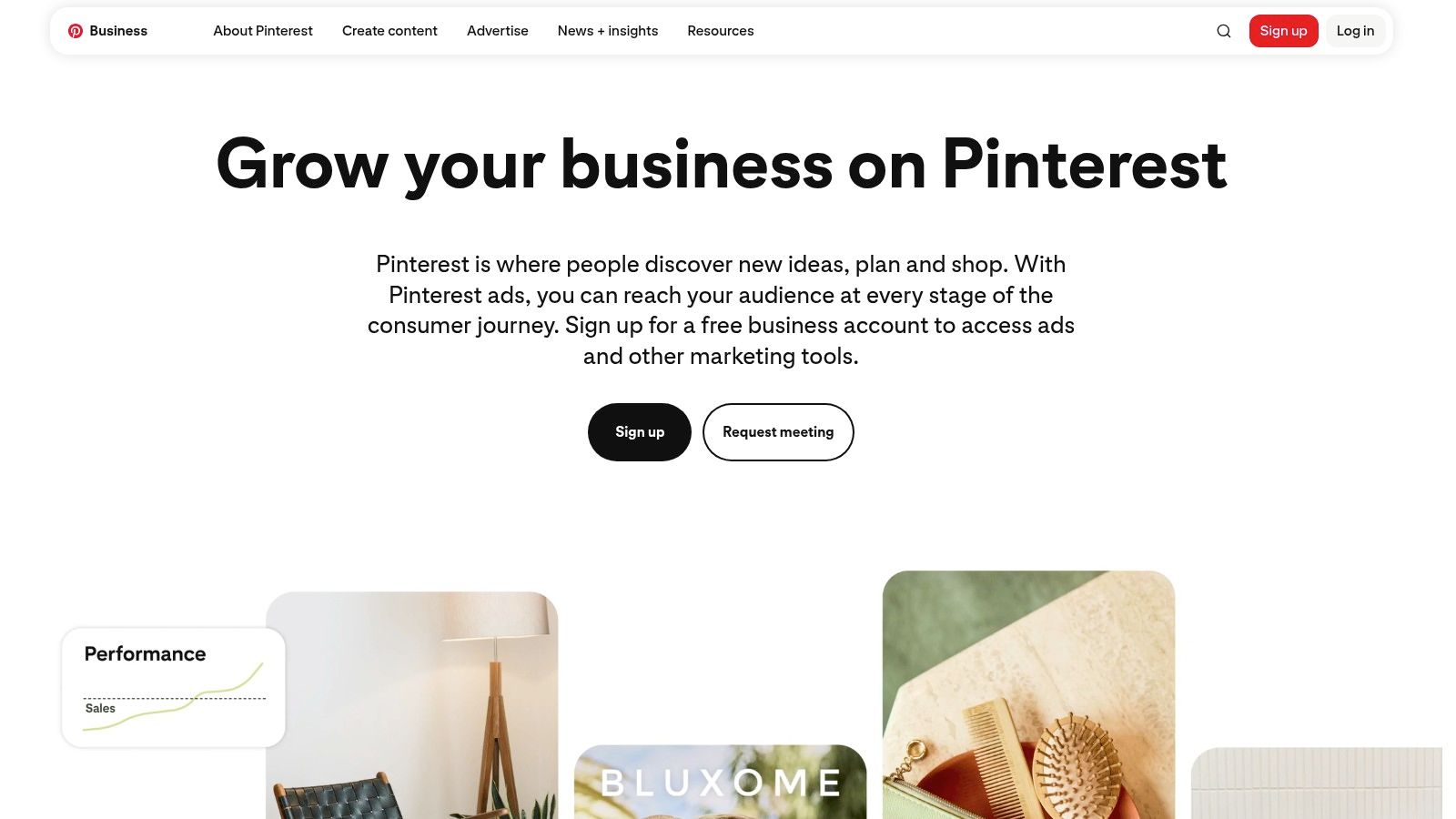
Set budgets and duration yourself, and start at Pinterest Ads Manager with the two or three boards your buyers already save.
5. Snapchat Ads Manager
Snapchat sells attention to a young, mobile-first audience through formats nobody else offers at scale: vertical Story ads, Collections, and augmented reality lenses. For app installs, entertainment, and consumer products with a strong visual hook, that combination can beat larger platforms on cost. For a B2B offer aimed at 45-year-old operations directors, it's money burned.
Three setup details decide whether an account works:
- Vertical or nothing: reuse a widescreen asset and you've paid for a crop nobody watches. Shoot 9:16 with safe zones for the caption bar.
- Pixel before launch: Snap Pixel tracks website actions and gives the auction something to optimize toward. Install it, verify events fire, then build campaigns.
- Public Profile and business account: both are required before you publish, and the profile is what people see when they tap the brand name.
Where Snapchat struggles is considered purchases, older demographics, and offers that need long copy to explain. Delivery also swings hard around seasonal moments and app-install competition, so cost per acquisition moves more week to week than on Meta. AR has a production cost that rarely appears in the plan, because a lens is a build, not an upload. Test one lens against one static format before committing. The workspace is shown below.
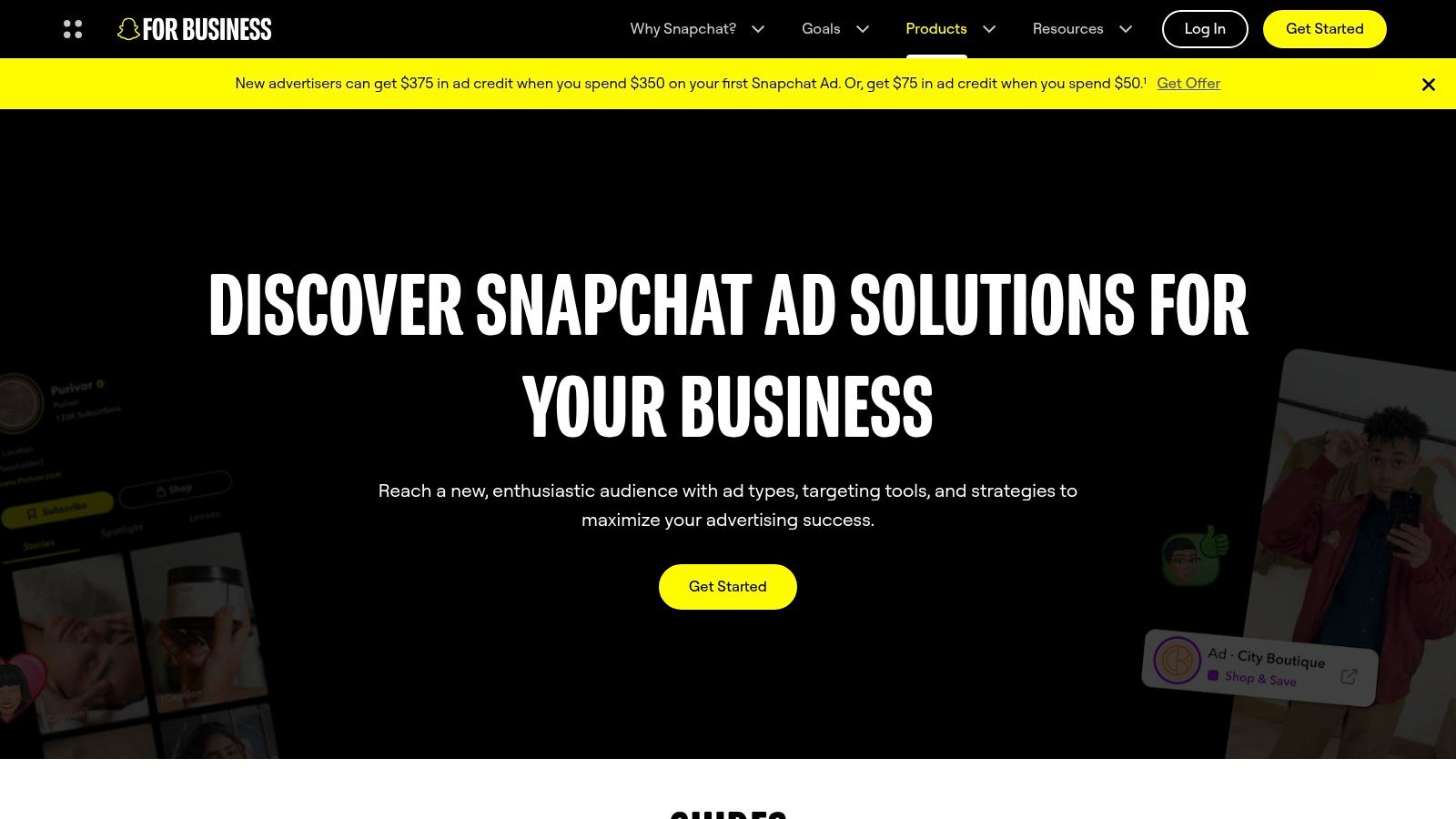
Start at Snapchat Ads Manager only when your buyer is under 30 and your product photographs well on a phone.
6. Reddit Ads
Reddit is the one major platform where the audience can smell an ad from the next subreddit over. That's the trade: community-level targeting no interest stack can replicate, in an environment that punishes anything reading like a press release. When it works, it works because the ad earns its place in the thread.
- Target subreddits directly: build the list from communities where your problem gets discussed, not from broad interest categories.
- Write like a member: the free-form ad format takes a title and body, so use it for a genuine question, a teardown, or a specific result.
- Centralize in Business Manager: ad accounts, users, pixels, and shared audiences all live there, which keeps a multi-client setup sane.
Post the ad you'd defend if a moderator pinned it. If you wouldn't answer the comments, don't run it.
Where Reddit loses is broad consumer reach and impulse ecommerce. Volume sits in a handful of large communities, smaller niche subreddits deliver modest impressions, and tone-deaf creative gets scrolled past or mocked. Categories with tight moderation rules need their eligibility checked before planning, not after. Reddit's interface keeps campaign setup simple enough for a first test.
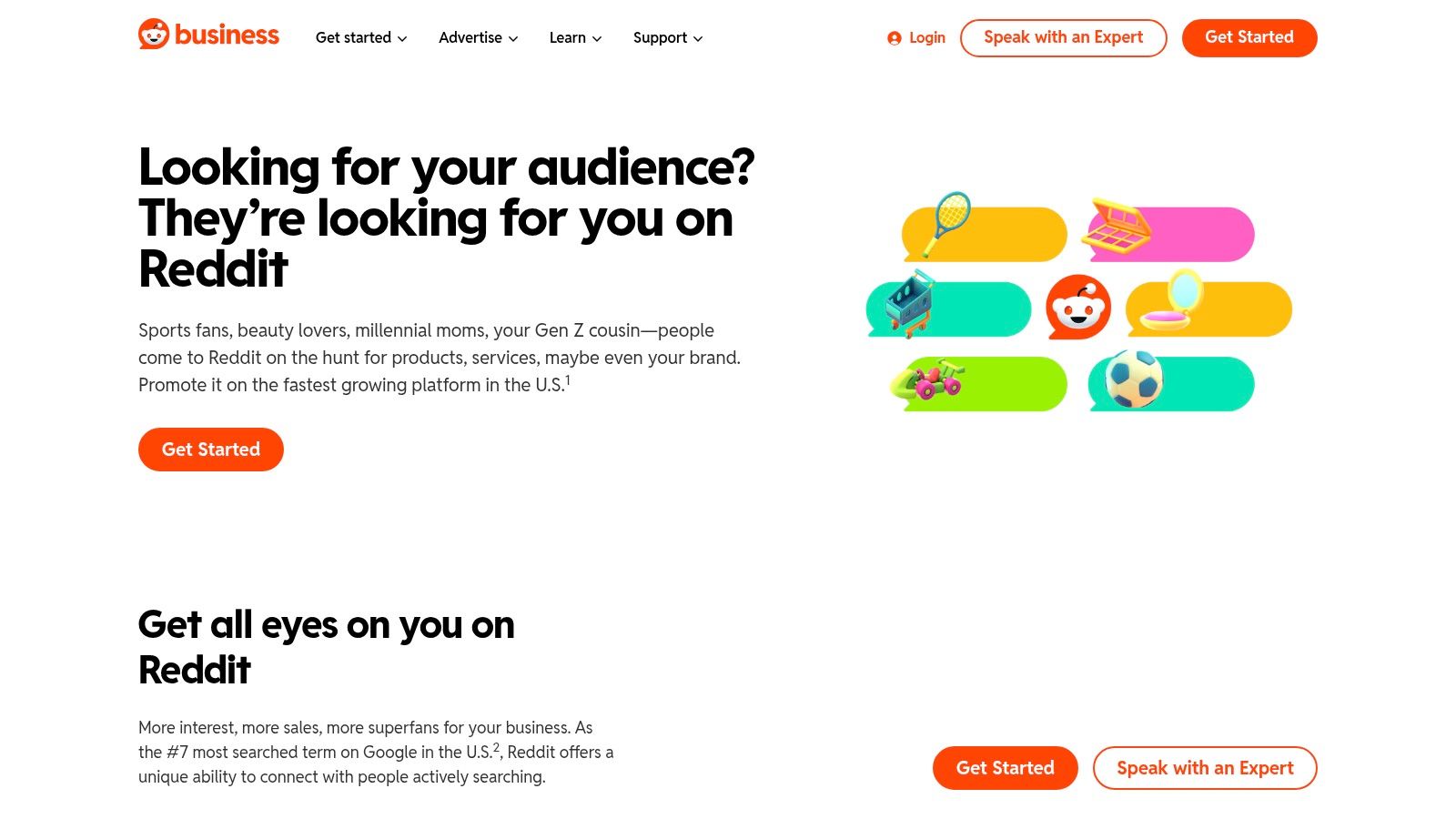
Open Reddit Ads when your buyer is a developer, a gamer, a hobbyist, or a finance nerd who already argues about your category online.
7. X Ads
X still owns one thing: the moment something happens. Live sports, earnings calls, outages, product launches. If your offer attaches to news or public conversation, you can be in the timeline while the conversation peaks, and that timing isn't for sale anywhere else. Campaign objectives cover reach, video views, and app installs, with controls for targeting, bidding, budget, placements, and reporting.
What to check before you spend:
- Is your buyer there: X works for tech, finance, media, sports, and crypto-adjacent audiences, and thins out for others.
- Brand safety settings: review them deliberately. Context matters more here than on any other platform, and exclusion lists are the only real control.
- Organic first, paid second: boosted posts perform best when the underlying post already earned replies and reposts. How to promote tweets effectively covers the amplification basics.
Where X loses is considered B2B with named-account targeting, where LinkedIn's filters do more work, and consumer ecommerce at scale, where Meta's catalog and signal quality beat it. Direct response also suffers because conversion tracking is thinner and audiences smaller. Account setup ties everything to the X handle you advertise from and needs billing in place before launch, so agencies should set up a client handle rather than borrowing their own. The platform is at X Ads.
8. YouTube Ads
Video is one of the largest format segments in the global social media advertising market, so YouTube earns a place in a social comparison even though every campaign runs inside Google Ads. The audience is different from feed scrolling: people arrive to watch something specific, across long video, Shorts and home feeds, which makes attention easier to earn and easier to waste.
Reading YouTube results honestly
View-through conversions inflate reported performance, because someone who saw three seconds of a skippable ad and bought on another device gets counted. Set conversion windows deliberately, compare against GA4, and keep a branded-search check running alongside. The campaigns that work pair in-stream for reach with Demand Gen for Shorts and feeds, then separate creative testing into its own campaign instead of burying variants in one ad group.
What it takes is production discipline. Six-second bumpers, 15-second cuts, and a 60 to 90 second in-stream asset cover most objectives, and every one needs the hook inside five seconds. That's a real cost, and it's why advertisers with no video library should stay on Meta or TikTok, where a phone shoot is enough. Targeting trades Meta's precise-person reach for intent and context.
Where YouTube loses is fast, cheap iteration. Testing ten concepts a week costs far more here than on a feed. Start at YouTube Ads when video is central to how people understand your product.
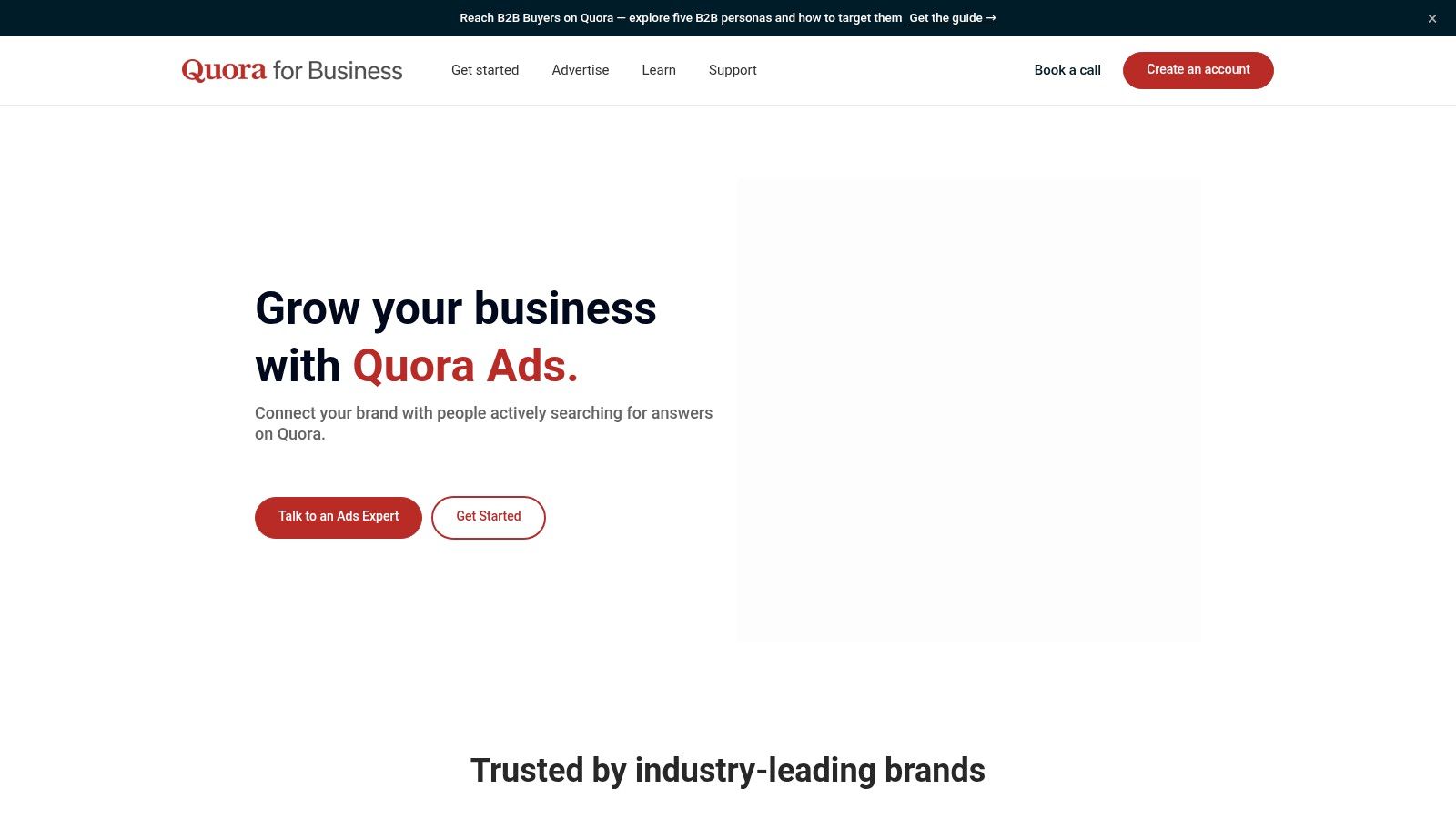
9. Quora Ads
Quora sells the moment before a decision. Someone typing "how much does Invisalign cost without insurance" or "best CRM for a two-person agency" sits closer to buying than most of a Meta interest stack. Native ads run beside those questions, and promoted answers let a named expert reply in public under a business profile.
- Promoted Answers carry the load: a well-written answer to a real question outperforms a display-style unit, and it keeps working as the question accrues traffic.
- Install the Quora Pixel: conversion tracking and optimization depend on it, and lead gen ads need it configured properly.
- Answer the question being asked: generic promotional copy dies in a Q&A environment where the surrounding text is somebody's actual problem.
Quora states there are no platform fees, no account minimums, and no required service commitments, which makes it cheap to test. Where it loses is scale and speed. Topic-level audiences are small, volume builds slowly, and a narrow topic in a small market may never deliver enough conversions to optimize. Check the topic inventory before you build a plan. The platform is at Quora Ads.
10. Nextdoor Ads
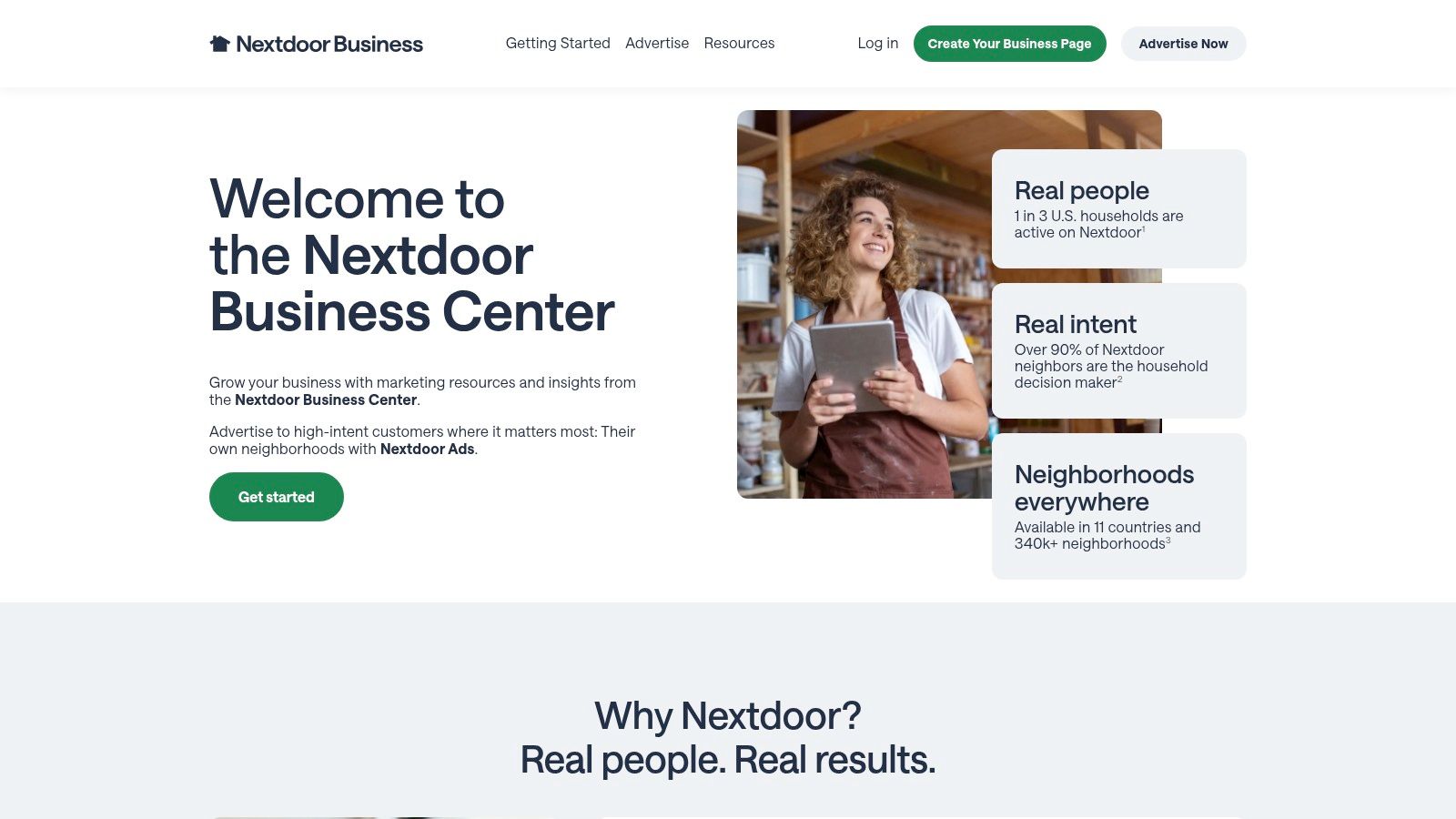
Nextdoor sells geography at a granularity no other platform matches: individual neighborhoods, verified residents, and local recommendations that carry more weight than a display unit. For a plumber, a dentist, a bakery, a real estate team, or a home-services franchise, that's a better match than a national audience buy with a radius filter.
The workflow is built for local operators rather than media agencies. You toggle campaigns, ad groups, and ads on and off directly, and spend and performance metrics sit in the business account without a separate reporting tool. What you don't get is scale: audience size and campaign volume vary enormously by neighborhood, and a dense urban zip behaves nothing like a suburb ten miles away.
Where Nextdoor loses is national ecommerce, B2B, and any business without a defined service area. Broadcasting a national offer at neighborhood level wastes the targeting you're paying for. Validate with a small test in the neighborhoods you serve, measure cost per lead against your Google Local Services Ads numbers, and expand only where the density supports it.
Start at Nextdoor Ads when the address is the qualification.
Social media advertising platforms at a glance
| Platform | Best for | Primary ad formats | Key targeting strength |
|---|---|---|---|
| Meta Ads Manager | Social performance, ecommerce, and lead generation | Multiple social ad formats and boosted posts | Audience targeting across Facebook, Instagram, and Messenger |
| TikTok Ads Manager | Campaigns built around short-form video | Short-form video ads | Audience controls paired with creative optimization |
| LinkedIn Campaign Manager | B2B and professional-services marketing | Sponsored Content, Sponsored Messaging, Dynamic Ads, Text Ads | Job function, seniority, industry, and company |
| Pinterest Ads Manager | Visual products and planned purchases | Multiple visual ad formats | Demographics, interests, and on-platform behavior |
| Snapchat Ads Manager | Mobile-first consumer and app campaigns | Vertical video, Story, Collection, Dynamic, and AR ads | Website-action tracking and retargeting |
| Reddit Ads | Reaching interest-based communities | Standard ads and free-form ads | Topic-specific communities and interests |
| X Ads | Timely campaigns tied to news, events, and conversations | Image, video, and carousel ads | Audiences active in relevant conversations |
| YouTube Ads | Video storytelling and reach or conversion campaigns | In-stream, in-feed, and Shorts video ads | Audience targeting through Google Ads |
| Quora Ads | Reaching people researching questions and solutions | Text, image, video, lead-generation, and promoted-answer ads | Questions, answers, and related topics |
| Nextdoor Ads | Local businesses seeking neighborhood reach | Local advertising placements | Geographic targeting around neighborhoods served |
Picking Your Platform and Running It Well
Sequence beats platform prestige. Audience first, creative capacity second, budget third. If your team can't produce fresh vertical video weekly, TikTok and Snapchat will underperform no matter how clean the campaign build is. If your buyers are named accounts, LinkedIn's filters earn back the premium. If the purchase starts with someone searching for ideas, Pinterest or YouTube does more per dollar than another feed.
Test small before committing a quarter's budget. One campaign, one audience, one offer, one conversion definition, run long enough to exit the learning phase and produce a stable cost per acquisition. Judge the test on qualified leads, new-customer revenue, or pipeline created. Clicks and engagement rate will tell you the ad was seen, not that it worked. Wire conversion tracking before launch: pixel, server-side events where the platform supports them, and a CRM definition of a lead that sales will call. Retrofitting that after the first confusing report costs more than the test itself.
Automation raises the stakes on all of it. Ipsos found 53% of people surveyed would be comfortable with AI being used to target advertisements, while 62% wanted social-platform ad content created by humans rather than AI (Ipsos AI Monitor 2025). Kantar's 2025 global study reported in the same document set that more than 70% of marketers had adopted generative AI for advertising creativity while more than half of consumers remained uneasy or distrustful of AI-generated ads. Advertisers are automating faster than their audiences want them to.
That gap argues for automation with review rather than automation with enthusiasm. Decide which decisions can run without a human (pausing a zero-conversion ad set, shifting budget between two identical campaigns) and which need sign-off (creative claims, new audiences, anything in a regulated category). Keep a change log you can read a week later, and make every automated edit reversible. One option built around that pattern is NotFair, which hosts MCP servers connecting AI agents to Meta Ads, Google Ads, X Ads, LinkedIn Ads and analytics with approval-gated changes and one-call undo. Pick the platform whose creative demands your team can meet, hold every platform to the same revenue definition, and let the numbers, not the pitch deck, decide where the next dollar goes.
NotFair connects Claude, ChatGPT, Cursor and other AI clients to Meta Ads, Google Ads, X Ads, LinkedIn Ads, Reddit Ads, TikTok Ads, Search Console and GA4, so you can diagnose a live account, see the exact diff of a proposed budget or creative change, approve it, and undo it in one call if it's wrong. The Free plan includes two shared ad-account spots with unlimited Search Console and Analytics access, and Growth at $79 a month adds five spots and unlimited Google and Meta operations. Visit NotFair to connect your first ad account and run your next platform review from live data instead of a dashboard screenshot.