


Most advice about choosing a marketing agency in San Francisco gets the sequence wrong. It starts with reputation, logos, or award history, then treats your actual growth problem as a secondary filter. That's backwards. The right agency depends first on whether you need a brand reset, a better digital experience, integrated media, B2B demand generation, or hands-on paid optimization.
That framing matters even more in San Francisco because the city has a deep agency base. RevenueBase identified 163 B2B performance marketing agencies headquartered in San Francisco as of September 2026, alongside 101 developer marketing agencies in the same market. Density gives buyers choice, but it also makes category mistakes expensive.
Public pricing adds another layer of confusion. San Francisco agency listings commonly show retainers around the $7,000 to $25,000 per month range, with higher-end engagements climbing beyond that, but those listings rarely explain what changes in scope, KPIs, or team seniority at each tier. So this guide compares firms by problem solved, likely fit, trade-offs, and pricing signals you still need to confirm in outreach. If your team also needs tighter oversight across Google Ads, Meta Ads, analytics, search data, and CRM context, a governed operational layer such as NotFair can also support agency management. If you want more brand-led options, see these best creative agencies.
Table of Contents
- 1. Goodby Silverstein & Partners (GS&P)
- 2. AKQA
- 3. Cutwater
- 4. 3Q/DEPT
- 5. ROI·DNA
- 6. Growth Pilots
- 7. Duncan Channon
- Top 7 San Francisco Marketing Agencies Comparison
- Turn the Shortlist Into a Qualified Brief
1. Goodby Silverstein & Partners (GS&P)

Hiring a well-known agency does not fix a positioning problem by itself. GS&P is a stronger fit when the core issue is brand transformation: the company story is unclear, creative varies by channel, or different teams are pushing disconnected messages into market.
That problem set is different from a pure efficiency brief. If conversion volume is healthy but brand recall, message consistency, or campaign distinctiveness is weak, an integrated creative agency can address the cause rather than only tune downstream metrics.
Where GS&P is strongest
GS&P is best assessed as a brand-first, integrated model. Its public positioning suggests a broad scope that can span strategy, creative, production, media, and measurement. For buyers, that usually means better coordination across functions, but also a larger operating structure than a specialist paid media shop.
This model tends to fit organizations with several stakeholders and long approval cycles. It is also a practical option when marketing leaders want one agency to connect upper-funnel brand work with campaign execution, instead of splitting strategy, creative, and media across separate firms.
- Best for brand transformation: Companies that need a clearer market position before performance marketing can improve.
- Best for cross-channel consistency: Teams trying to unify strategy, creative, production, and media in one engagement.
- Best for organizational complexity: Brands managing multiple business units, audiences, or internal decision-makers.
- Less ideal for narrow paid acquisition: Advertisers focused mainly on account-level PPC testing may get faster iteration from a specialist.
Trade-offs to examine
The main decision criterion is whether your bottleneck is message quality or media efficiency.
If the message is weak, GS&P's structure may help. If the message is already strong and the issue sits inside bidding, targeting, feed management, or landing-page test velocity, the agency may be broader than necessary. Large integrated shops often create value through alignment and creative quality. They are not always the cheapest or fastest option for tightly scoped performance work.
A practical filter helps here. Ask whether your team needs a new brand platform, a campaign system built from that platform, and coordination across creative and media. If yes, GS&P belongs on the shortlist. If no, confirm that you are not paying for capabilities outside the brief.
Pricing should be confirmed directly with the agency. Public materials do not provide a clean, comparable pricing benchmark for GS&P, so buyers should ask about minimum engagement size, whether production and media are scoped separately, what seniority is included in the account team, and whether reporting is tied to business outcomes or campaign activity.
Visit Goodby Silverstein & Partners.
2. AKQA
AKQA belongs on a shortlist for a different reason than a classic brand shop or a channel specialist. Its value shows up when weak results are tied to the experience after the click, not just the ad before it.
That usually changes the agency decision. A company may think it needs better campaigns, then find that the larger constraint sits in site architecture, product flows, design systems, analytics setup, or the coordination required to ship those changes across markets and teams.
AKQA's public positioning centers on the overlap between digital product, customer experience, and marketing. For buyers, that matters because it points to a model built for connected work: creative that can influence product surfaces, UX decisions that affect conversion, and engineering support that may sit close to campaign goals rather than outside them.
The trade-off is cost of coordination versus depth of specialization.
If your problem spans acquisition and experience, that coordination can be useful. If your team already has a stable site, clear conversion paths, and reliable measurement, a narrower paid media partner may produce faster testing cycles with less process overhead.
A practical way to assess fit is to map where performance is breaking:
- If paid traffic quality looks fine but conversion drops on-site, AKQA is a stronger candidate.
- If regional teams are producing inconsistent digital experiences, its operating model may help standardize execution.
- If the brief is mostly Google Ads management, Meta optimization, or account-level experimentation, confirm that you are not buying strategy, design, and engineering capacity you will rarely use.
Pricing is harder to compare from public information alone, so readers should treat capability and commercial structure as separate questions. Confirm whether engineering and analytics implementation are included in the core scope, how much work is delivered by the San Francisco office versus the broader network, and whether retainers are built around product, campaign, or blended experience work.
Visit AKQA.
3. Cutwater
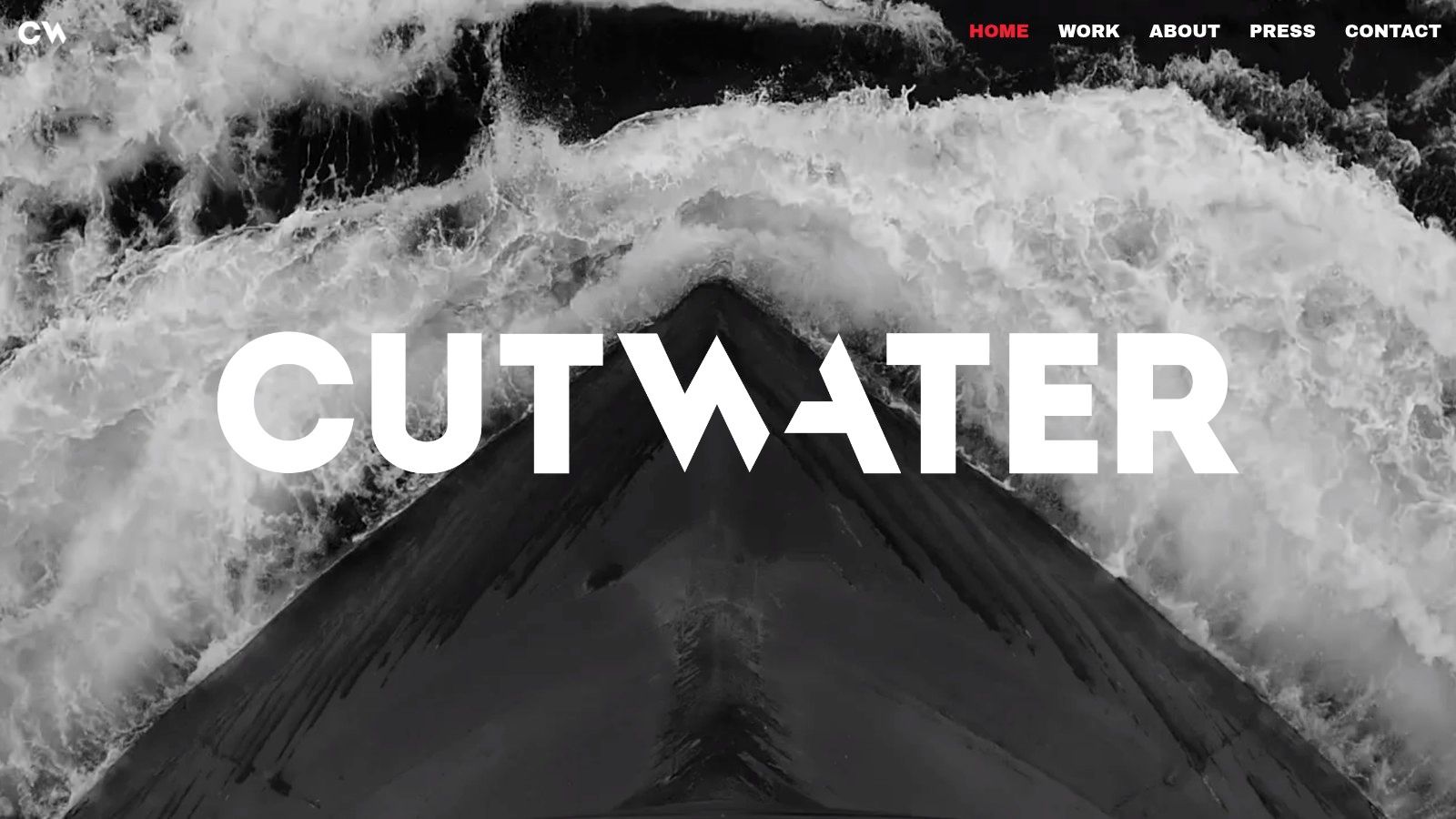
Some companies do not have a channel problem first. They have a coordination problem. The brand story, creative output, and media plan sit in different places, so campaigns lose consistency before performance data becomes useful.
Cutwater fits that problem better than several agencies on this list. Its value is less about being the largest buyer of media or the most specialized PPC operator, and more about keeping brand development, campaign creative, and media execution close enough that one decision can carry through the full program. For teams trying to avoid a split between a brand shop and a media shop, that operating model can reduce friction and shorten approval loops.
The practical fit is integrated creative.
A buyer should still separate capability from commercial assumptions. Public materials can indicate whether an agency works across branding, production, and media, but they rarely make pricing structure easy to compare. That matters here because an integrated model can be efficient for a company replacing multiple vendors, yet less efficient for a team that already has settled messaging and only needs account-level optimization.
A simple test is to ask where campaign value is currently being lost.
If the issue is inconsistent creative across channels, weak translation of strategy into media, or too many handoffs between partners, Cutwater looks stronger. If the issue is bid management, feed optimization, paid social testing cadence, or platform-specific reporting depth, a smaller performance-focused agency may fit the brief more closely.
Three buying signals help clarify the choice:
- Good fit: You need one partner to connect positioning, campaign assets, and media deployment.
- Better than a pure creative shop: Media planning and buying sit within the same relationship, which can improve continuity from concept to launch.
- Less suited to narrow paid search scopes: Public-facing positioning appears weighted toward brand and integrated campaign work rather than highly specialized PPC execution.
Before discussing price, confirm scope design. Ask whether media fees are separate from strategy and creative, who owns optimization after launch, and how senior the day-to-day media team will be.
Visit Cutwater.
4. 3Q/DEPT
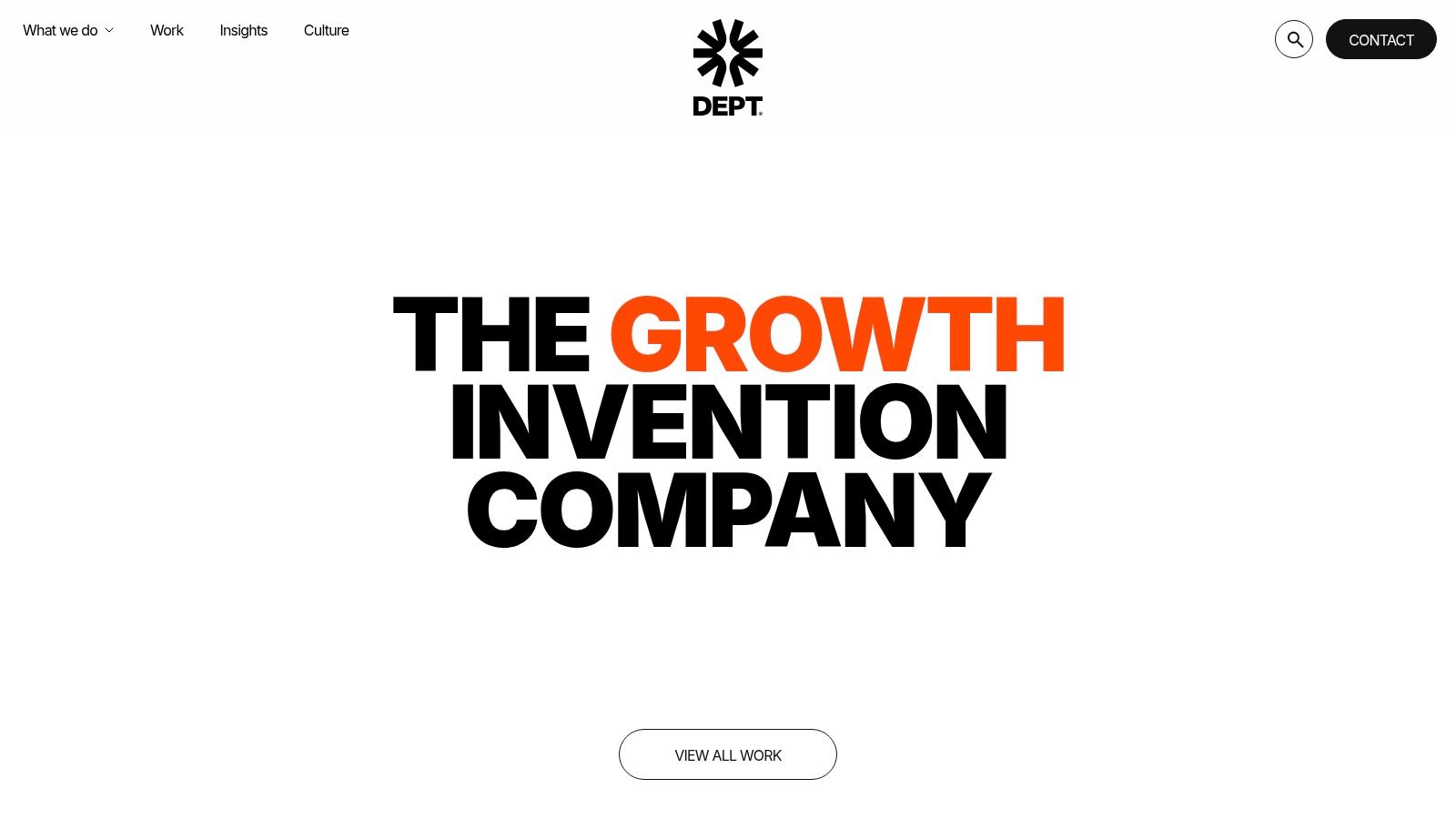
A large paid media budget does not automatically require a large agency. It usually requires one when the problem is coordination: multiple channels, frequent testing, shared reporting, and enough operational complexity that smaller teams start to strain.
That is the clearest case for 3Q/DEPT in this roundup.
Its public positioning points to scaled performance marketing rather than brand reinvention or B2B revenue architecture. For a buyer sorting agencies by business problem, this places 3Q/DEPT in the paid growth category. The likely fit is a company that already knows its offer, has spend to deploy across several channels, and needs a partner that can run search, paid social, programmatic, CRO, and analytics inside one system.
The main evaluation question is not whether the agency can buy media. Many firms can. The more useful question is whether its operating model improves decision speed and measurement quality once budgets, stakeholders, and testing volume increase.
A practical way to compare 3Q/DEPT against smaller PPC shops is to pressure-test the process:
- How are test ideas prioritized across channels?
- Who approves creative and budget changes?
- What reporting is standard versus custom?
- How does the team handle attribution disagreements between platform data and business outcomes?
Those details matter more here than headline service lists. A specialist boutique may move faster on a narrow account and offer closer senior attention. 3Q/DEPT is more compelling when the work involves scale, cross-channel governance, and analytics discipline that smaller teams may not support as consistently.
If you are comparing specialist PPC partners, this list of Google Ads agency comparisons can help frame the discussion.
One caution on pricing: public materials can clarify capability, but they rarely show fee structure with enough detail to compare retainers, media fee percentages, analytics scope, or CRO support fairly. Confirm what is included before using price as a deciding factor.
Visit 3Q/DEPT.
5. ROI·DNA
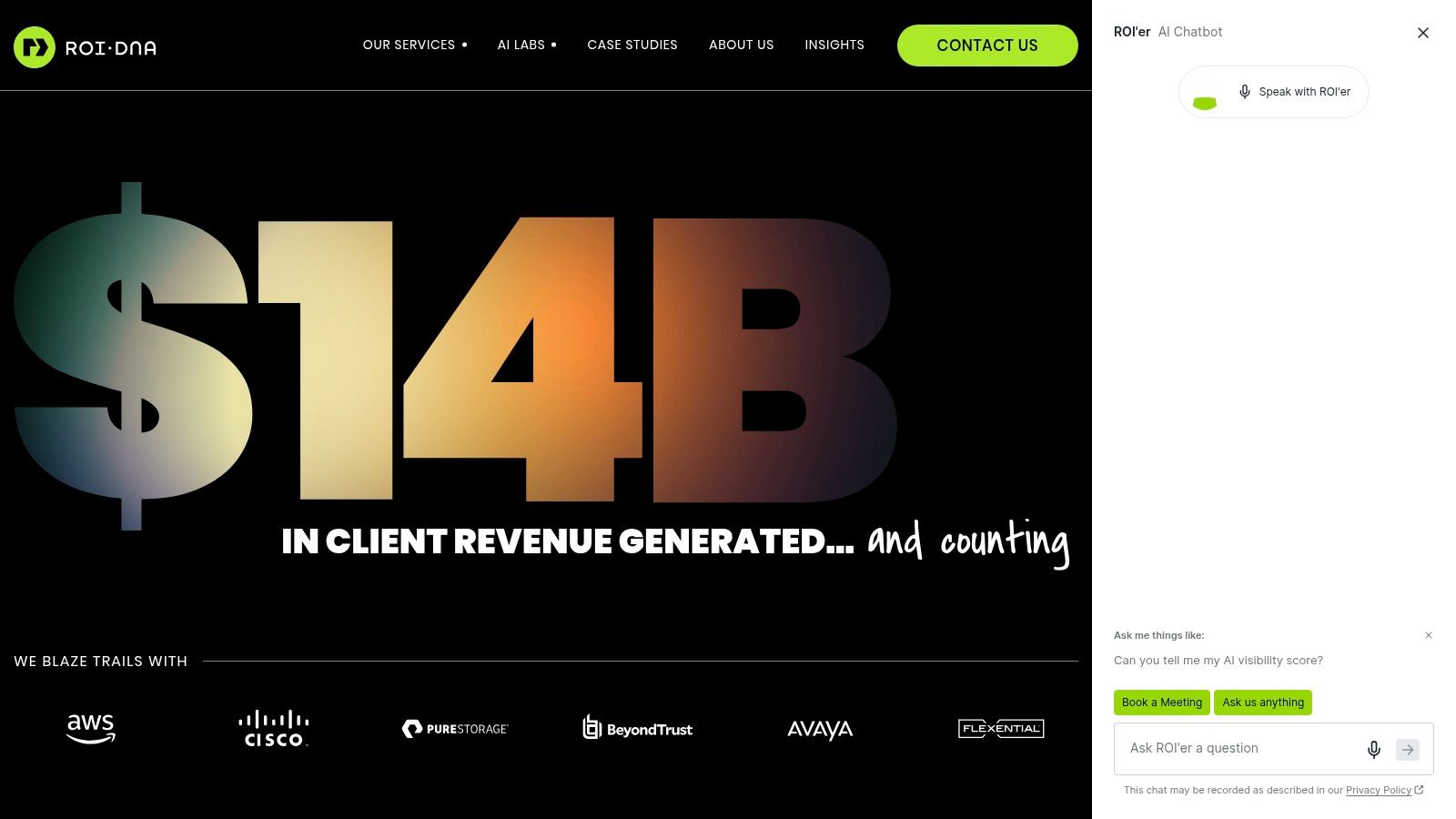
B2B pipeline is a different buying problem from general paid growth. ROI·DNA stands out in this roundup for companies that need marketing tied to pipeline stages, CRM definitions, and revenue accountability rather than raw lead volume.
That distinction changes how you should evaluate the agency. For SaaS, enterprise technology, and other sales-led organizations, channel management only matters if it maps cleanly to how sales accepts, advances, and measures opportunity creation. Public materials suggest ROI·DNA focuses on B2B demand generation, paid media, SEO, CRO, and revenue-oriented execution, which makes it easier to compare against RevOps-aware demand gen firms than against broad consumer performance shops.
A useful test is to start with your internal friction. If marketing reports success in MQLs, sales reports success in pipeline, and finance reports success in booked revenue, the agency model has to reduce those reporting conflicts, not add another dashboard on top. Teams in that position may also benefit from reviewing a Google Ads audit for lead generation accounts before expanding agency scope, especially if search is already producing volume but not enough qualified demand.
Three decision criteria matter more here than a long service menu:
- Funnel alignment: Ask how the team defines qualified demand, sales acceptance, and pipeline contribution.
- System coordination: Confirm whether paid media, SEO, CRO, and CRM reporting are planned together or managed in parallel.
- Business fit: This model is usually a stronger match for complex B2B sales cycles than for straightforward DTC e-commerce programs.
Pricing needs separate verification. Public positioning can clarify capability, but it rarely shows whether RevOps support, analytics configuration, content inputs, or CRO work sit inside the retainer or outside it. Confirm scope, reporting definitions, and account ownership before comparing fees.
Visit ROI·DNA.
6. Growth Pilots
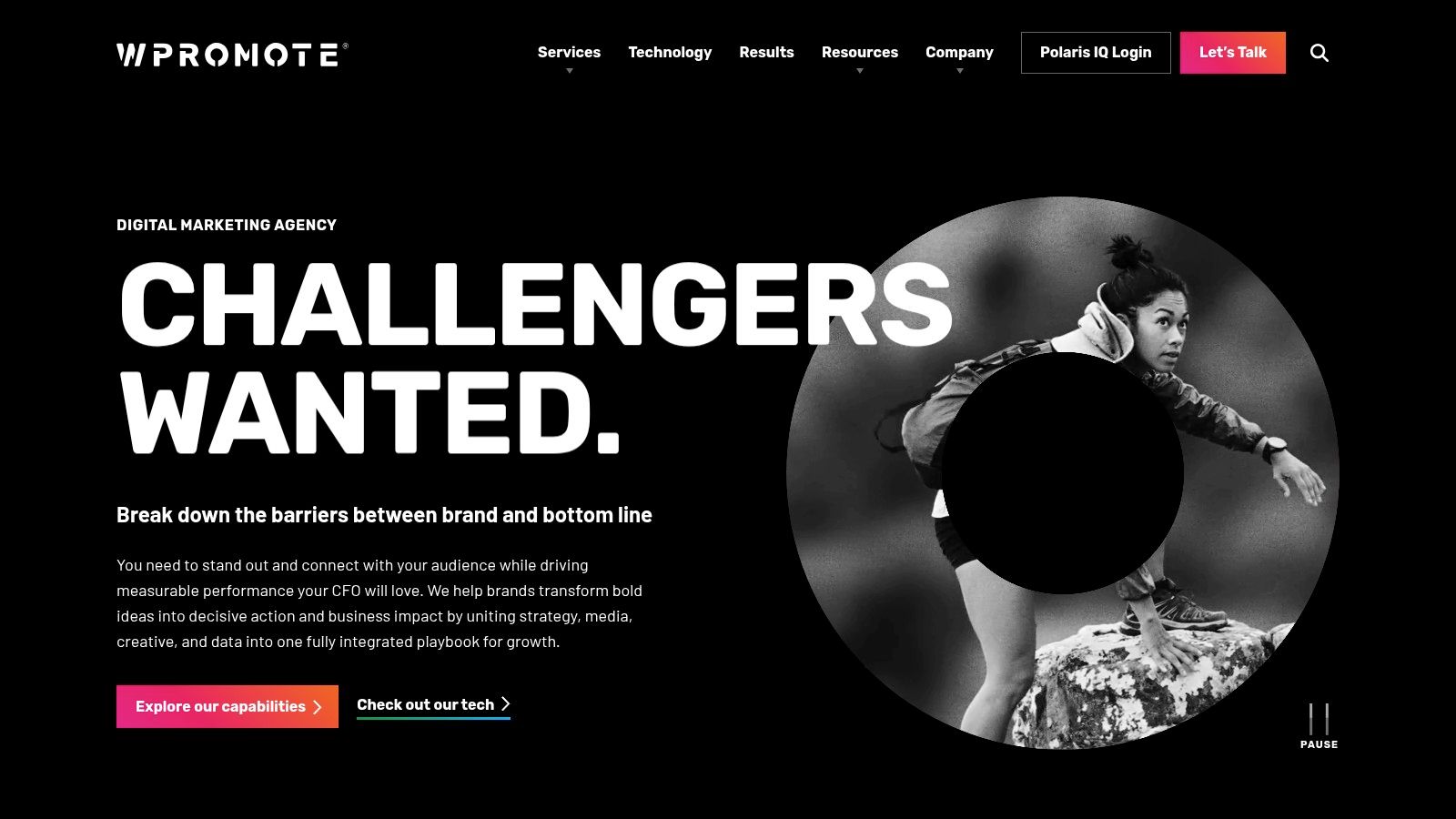
Growth Pilots fits a narrower problem than several agencies on this list, and that is often the advantage. If the brand position is already set, the site is usable, and the main question is whether paid search or paid social can produce more efficient acquisition, a boutique performance shop is often easier to evaluate than a broader agency with overlapping services.
The practical appeal is operating speed. Smaller paid media teams usually have fewer approval layers, which can matter when budget pacing, query quality, and creative fatigue need weekly adjustments rather than quarterly planning.
A better way to assess Growth Pilots is by asking what your internal team can already supply.
If product marketing can provide clear messaging, if design can turn around ad variations, and if the site does not require major UX work, this model can work well. In that setup, the agency relationship stays focused on channel execution, testing discipline, and account management quality. If those inputs are missing, performance media often exposes the weakness rather than fixing it.
That distinction makes Growth Pilots a useful option for the boutique performance category in this San Francisco roundup. Buyers who are comparing agency models by business problem should place it under paid growth execution, not brand transformation, digital experience, or integrated media.
Two trade-offs deserve attention. First, narrow scope can improve accountability inside ad platforms, but it can also leave gaps around creative production, lifecycle nurture, or analytics architecture. Second, close operator access is valuable only if the team has time in the account each week. A lean advertiser deciding whether this approach fits can use this guide to Google Ads for small business teams as a reference point. Teams that still rely on outbound should also factor in cold email deliverability, because weak inbox placement can make paid channels look stronger or weaker than they are.
Questions worth asking in a sales process:
- Who makes weekly optimizations in-platform, and how senior are they?
- What inputs are assumed from the client on landing pages, creative, and tracking?
- What is included in scope versus priced separately, especially for reporting, testing support, or conversion path analysis?
Pricing should be verified separately from capability. Public positioning can indicate focus, but it rarely shows whether strategy time, creative iteration, and measurement work are included in the retainer or added later.
Visit Growth Pilots.
7. Duncan Channon
Performance problems often start upstream. A brand can buy media efficiently and still underperform if the message, creative system, or channel coordination is weak. That is the business problem Duncan Channon appears best equipped to address.
Among the agencies in this San Francisco group, Duncan Channon fits the integrated creative category. Its public positioning points to a mix of strategy, creative, media, social, analytics, and experiential capabilities under one independent agency structure. For buyers, that matters less as a branding label than as an operating model. Fewer agency handoffs can improve speed, keep campaign logic more consistent across channels, and reduce the friction that shows up when creative and media teams optimize toward different goals.
A practical test is whether your marketing challenge involves both perception and action. If the answer is yes, Duncan Channon is more relevant than a narrow paid acquisition shop. If the brief is limited to platform execution, bid management, or short-cycle demand capture, the fit is less obvious.
Three signs point toward this model:
- You need one partner to connect brand strategy, campaign creative, media planning, and measurement.
- Your team is running awareness and activation at the same time, and disconnected vendors are creating delays or diluted accountability.
- The work depends on persuasion, public trust, or audience education, not just conversion mechanics.
That profile tends to suit established brands, public-sector communication, health-related campaigns, and organizations with broader stakeholder considerations than direct response alone.
The trade-off is straightforward. Integrated agencies can solve coordination problems, but they also require clearer scoping because production, analytics depth, social content volume, and post-launch optimization are not always included at the same level across accounts. Pricing should be confirmed separately from capability claims.
In a review process, ask for specifics on who handles media strategy versus buying, whether analytics support covers implementation or only reporting, and how much campaign adaptation happens after launch. Visit Duncan Channon.
Top 7 San Francisco Marketing Agencies Comparison
| Agency | 🔄 Implementation complexity | ⚡ Resource requirements | 📊 Expected outcomes | 💡 Ideal use cases | ⭐ Key advantages |
|---|---|---|---|---|---|
| Goodby Silverstein & Partners (GS&P) | High, enterprise processes, multi‑channel coordination | High, creative production, cross‑discipline teams, budget | Strong brand lift and cultural impact; platform-to-performance potential | Brand platform work for established/global brands | ⭐⭐⭐⭐ High creative bar; integrated media & analytics |
| AKQA (San Francisco studio) | High, product, UX, engineering and marketing integration | High, engineering, data integrations, enterprise tooling | Measurable growth through aligned product + experience | Projects requiring digital product + campaign alignment | ⭐⭐⭐⭐ Deep UX/engineering + global frameworks |
| Cutwater | Medium, nimble but integrated brand + media workflows | Medium, senior leadership involvement, in‑house media | Distinctive brand platforms that support digital/social performance | Brands seeking differentiation with accountable media buying | ⭐⭐⭐ Strong brand craft; nimble independent team |
| 3Q/DEPT (DEPT) | Medium‑High, networked processes, scalable operations | High, paid media scale, analytics, testing infrastructure | Robust paid‑media performance and optimization at scale | Scaled paid media operations and analytics‑heavy growth | ⭐⭐⭐⭐ Deep paid media rigor; mature testing & analytics |
| ROI·DNA | Medium, B2B funnel complexity, martech integration | Medium‑High, B2B stacks, LinkedIn/SEO/CRO capabilities | Pipeline and demand‑gen outcomes for B2B/SaaS; AI audience insights | SaaS and enterprise B2B demand generation | ⭐⭐⭐⭐ B2B specialization; AI‑driven audience/messaging research |
| Growth Pilots | Low‑Medium, focused, high‑touch execution model | Medium, selective roster, channel specialists (SEM/social) | Fast CAC/ROAS improvements with transparent reporting | Venture‑backed growth companies needing speed and clarity | ⭐⭐⭐⭐ Deep SEM/paid social focus; high transparency |
| Duncan Channon | Medium‑High, integrated creative + media workflows | Medium‑High, full‑service capabilities, experienced team | Behavior‑change, awareness and performance follow‑through | Brands wanting award‑winning creative with in‑house media | ⭐⭐⭐⭐ Integrated team; strong creative reputation |
Turn the Shortlist Into a Qualified Brief
A better agency search starts with one sentence: “Our main growth problem is X.” If you can't define that clearly, every proposal will sound plausible. For some companies, X is brand ambiguity. For others, it's digital experience friction, weak media efficiency, thin B2B pipeline quality, or lack of hands-on optimization.
Then define internal ownership before you ask for proposals. Decide who owns messaging, landing pages, creative approvals, CRM definitions, analytics implementation, and channel reporting. Agency performance often degrades because responsibilities stay vague, not because the team lacks skill.
Client retention data reinforces why this matters. Retainer-based agencies averaged 1.6% monthly churn, 18% annual churn, and 56 months of client lifespan, while project-based agencies averaged 4.2% monthly churn, 42% annual churn, and 24 months of client lifespan. In a high-cost market such as San Francisco, that points buyers toward recurring scopes, tighter reporting, and clearer operating cadence instead of one-off bursts that reset context every quarter.
What to ask every agency
Use proposal meetings to qualify fit, not just gather slides.
- Ask for relevant examples: Not generic portfolio work. Ask for work that resembles your buying cycle, channel mix, and internal constraints.
- Ask who will do the work: Confirm team structure, seniority, and whether strategy and execution sit with the same group.
- Ask how success is measured: Get the reporting cadence, KPIs, and escalation process in writing.
- Ask about scope boundaries: Confirm minimums, production assumptions, analytics support, and what triggers additional fees.
- Ask about reversibility: For paid media, clarify how approvals, change history, diagnostics, and rollback are handled.
Reputation is a screening tool. It isn't a decision rule.
For paid media engagements, governance matters more now because agencies and in-house teams increasingly work through AI-assisted workflows. A hosted operational layer such as NotFair is one relevant option when teams want connected reads across advertising, analytics, search, and CRM systems, along with approval-gated writes, explicit diffs, logged changes, and one-call undo. That won't choose the right agency for you. It will make the relationship easier to inspect and control.
If your team also manages intake and lead capture across multiple client or campaign paths, these smart forms for agencies are another practical part of the operating stack.
NotFair gives agency teams and in-house marketers a hosted MCP layer that connects AI agents to Google Ads, Meta Ads, analytics, search, and CRM systems with live reads and approval-gated changes. That's useful when you're hiring or managing a marketing agency in San Francisco and want better visibility into diagnostics, edits, and rollback before work happens in-platform. See how it works at NotFair.