

Most advice about AI PPC management starts with the wrong promise: automate more, check less, and let the platform find the answer. That approach can reduce manual work, but it also creates a dangerous blind spot. When Google or Meta changes targeting, bidding, matching, or budget distribution inside a black box, a lower workload doesn't automatically mean better control.
The practical question isn't whether AI can adjust bids. Native platforms already do that. The harder question is whether your team can explain what changed, why it changed, who approved it, and how to reverse it when performance deteriorates. AI agents can add scale, but only an operating model built around live data, approval gates, explicit diffs, and rollback safety makes that scale trustworthy.
Table of Contents
- The Governance Gap in Platform Automation
- Measuring the Impact of AI-Driven Campaigns
- Diagnosing Query Drift and Protecting Bid Inputs
- Enforcing Approval Gates and Auditability
- Unifying Platforms with Model Context Protocol
- Adapting to AI Search and Privacy Fragmentation
- Deploying Your AI Agent Playbook
The Governance Gap in Platform Automation
Platform-native automation isn't useless. Google Smart Bidding can evaluate contextual signals at auction time, while newer campaign products expand matching, creative variation, and placement decisions beyond the controls many advertisers used to manage manually. The mistake is treating those capabilities as a complete management system.
Recent coverage notes that Performance Max gained audience exclusions, placement reporting, and forecasting, while AI Max for Search bundles broader query matching, text customization, and final URL expansion. Those developments make automation more capable, but they also move important decisions further behind the interface. Recent coverage of these changes describes the central operational problem clearly: marketers need scale without losing change history, approval gates, or rollback safety.
A native platform optimizes toward the objective and signals it receives. It doesn't automatically give a client, finance lead, or agency manager a complete explanation of every strategic shift. It may show performance results, recommendations, or campaign-level reporting, but that isn't the same as a durable record of decision context.
Automation and accountability are different jobs
A bidding model can decide that a bid should change. It can't decide whether the conversion action is still trustworthy, whether a product margin has changed, or whether a sudden budget increase conflicts with the client's cash position. Those judgments belong in the governance layer.
The external agent should sit above the ad platforms, not compete with their auction models. Its role is to:
- Read live account data: Inspect spend, search terms, budgets, keywords, conversions, and campaign status at query time.
- Diagnose causes: Separate tracking issues, query drift, pacing problems, and genuine demand changes.
- Propose bounded actions: Draft a negative-keyword cluster, budget move, pause, or structural edit with clear limits.
- Request approval: Show the exact before-and-after state before writing to a live account.
- Record the outcome: Log the request, approver, timestamp, result, and reversal path.
Practical rule: Let the platform optimize auctions, but keep strategic direction and write access under your own governance.
The IAB's 2025 State of Data report found that 70% of agencies, brands, and publishers had not yet fully scaled AI across media planning, activation, and analysis, even though AI had already been used in digital advertising for years. The same report said more than 80% of organizations that hadn't fully scaled AI expected to do so on a defined timeline. The IAB findings and their implications for digital advertising point to a rollout problem, not a lack of technical feasibility.
That distinction matters. The competitive advantage won't come from granting an agent unrestricted access. It will come from making AI-assisted decisions operationally safe enough to use every day.
Measuring the Impact of AI-Driven Campaigns
AI can improve paid-media performance, but performance claims need context. The reported uplift depends on conversion quality, account structure, signal availability, budget discipline, and the quality of the operating process around the model.
One 2026 industry synthesis reported 50% higher click-through rates, 30% better conversion rates, and a 40% ROI boost for AI-powered PPC campaigns compared with traditionally managed campaigns. The same synthesis reported that 88% of marketers used AI tools in their daily workflow, while generative AI accounted for 15.1% of all marketing activities. These figures come from the cited AI digital marketing statistics synthesis, so they should be treated as industry-reported comparisons, not a guaranteed forecast for every account.
The useful takeaway isn't that every advertiser should expect those exact gains. It's that AI can influence several parts of the performance chain at once:
- Click quality: Matching, creative selection, and audience decisions can change which users see and engage with an ad.
- Conversion efficiency: Faster adjustment to auction and intent signals can improve traffic allocation when conversion tracking is reliable.
- Return on investment: Better allocation can increase output from the same budget, but only if the model optimizes toward commercially meaningful outcomes.
- Operator capacity: Agents can reduce the time spent collecting reports, checking pacing, and preparing repetitive changes.
Separate model capability from organizational readiness
The IAB data creates an important counterpoint. Many organizations expect to scale AI, but most hadn't fully scaled it across the media lifecycle when the report was published. That gap usually appears in the workflow rather than the algorithm.
A team may have access to Smart Bidding, automated recommendations, or an AI assistant and still lack:
- A trusted conversion taxonomy.
- A documented definition of qualified revenue or lead value.
- Permission boundaries for campaign changes.
- A consistent review process across client accounts.
- A change log that connects actions to results.
- A rollback procedure for bad edits.
Without those controls, a reported uplift can hide operational fragility. An account may produce more conversions while sending poor leads to sales. A bidder may improve reported ROAS by concentrating spend in a narrow segment that cannot scale. An agent may recommend a technically reasonable change that violates inventory, brand, geography, or margin constraints.
A practical baseline should therefore include both performance and process measures. Record the account's current efficiency, conversion quality, spend distribution, and manual workload before introducing an agent. Then compare not only platform metrics, but also approved changes, rejected recommendations, tracking anomalies, and time to diagnose issues.
For analytics validation, connect the paid-media view with Google Analytics diagnostics and platform data. That comparison helps teams distinguish an algorithmic improvement from a reporting artifact, duplicated conversion, or change in lead quality.
The right question isn't “Did AI increase the number in the dashboard?” Ask whether it improved the business outcome, used valid signals, and left the team with enough evidence to repeat or reject the decision.
Diagnosing Query Drift and Protecting Bid Inputs
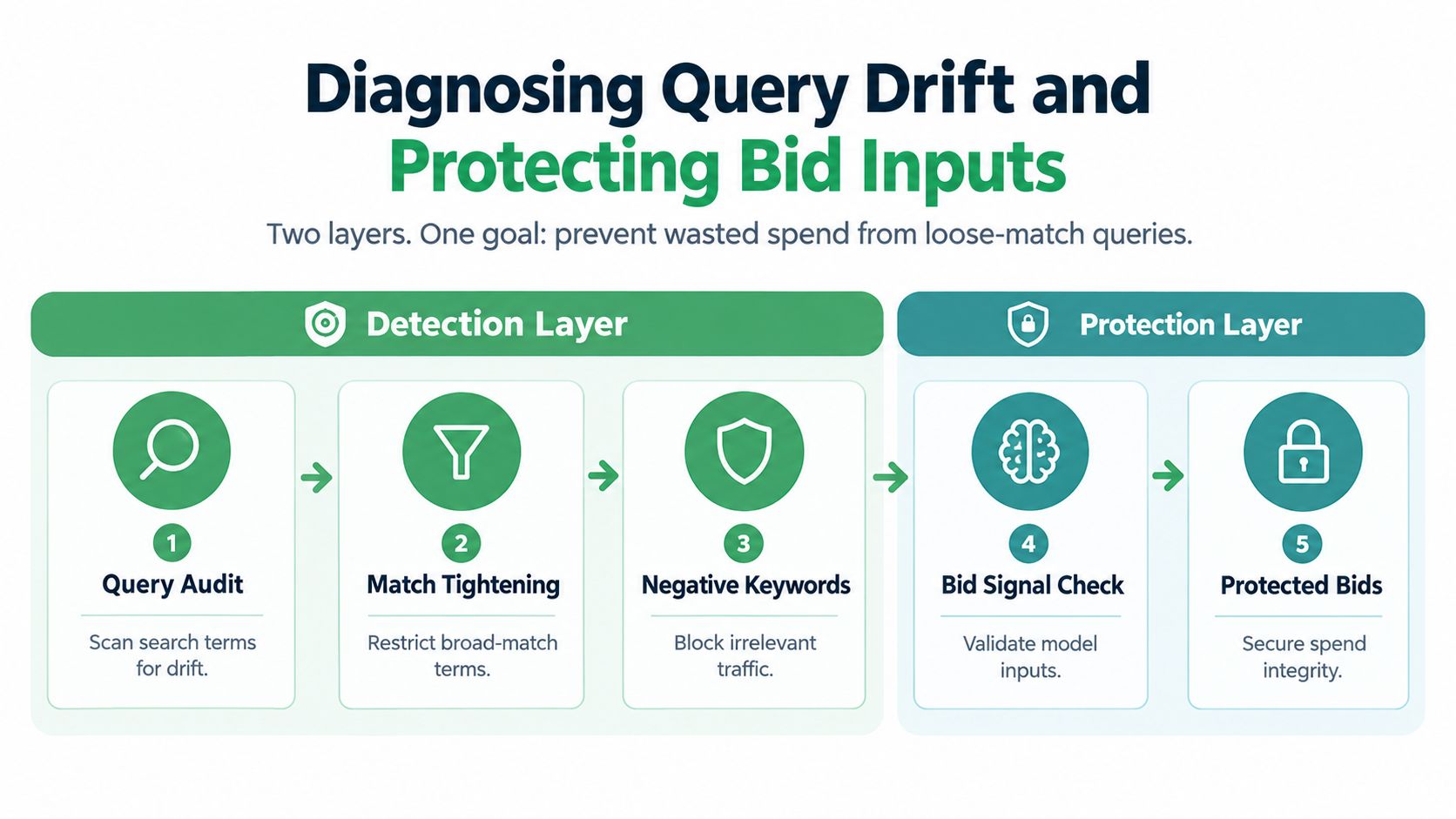
Smart Bidding can price the auctions available to it, but it can't repair every semantic mismatch in the traffic entering the campaign. Google identifies the search terms report as the place to inspect the queries that triggered ads and recommends adding irrelevant terms as negative keywords. Google's search terms and negative-keyword guidance supports a two-layer workflow: first protect traffic quality, then let the bidding model optimize within that cleaner environment.
The order matters. If a broad or expanded match begins attracting research queries, job-seeking searches, support requests, or unrelated modifiers, the bidder may still learn from those auctions. It can make delivery more efficient according to the available conversion signals without solving the underlying intent problem.
Build the detection layer
Start with live query review rather than a static keyword export. An agent should group search terms by intent, identify new modifiers, compare query themes with landing-page promises, and rank potential waste by spend at risk.
Useful clusters include:
- Irrelevant subject matter: Queries that share words with the offer but describe a different product, audience, or use case.
- Unqualified intent: Research, educational, free, used, employment, or support terms when the campaign targets commercial demand.
- Geographic mismatch: Locations or service areas the business cannot serve.
- Offer mismatch: Queries for a different price point, category, model, or contract type.
- Duplicate intent: Terms that should be routed to another campaign or landing page.
The agent shouldn't immediately publish every proposed negative. It should show the query examples, affected campaigns, historical spend, conversion evidence, and the proposed match type. A reviewer can then approve a cluster, edit it, or reject it when the model has misunderstood a legitimate long-tail term.
Apply the protection layer
Once the query audit is complete, convert approved clusters into structural protections. That may mean shared negatives, campaign-level negatives, tighter match logic, exclusions, or a change to the landing-page route. The correct fix depends on the cause of the drift, not just the presence of an unwanted query.
The bidder optimizes the auctions it receives. The governance layer decides which auctions deserve to remain eligible.
After a change, monitor both traffic quality and learning inputs. Check whether the irrelevant cluster has declined, whether qualified query coverage has been damaged, and whether conversion signals now represent a more coherent intent set. A negative list that grows without review can be as harmful as no negative list at all.
This process is especially valuable for agencies managing several accounts. The agent can standardize detection and draft work, while each account retains human approval for brand language, regulated categories, local service areas, and commercial exceptions.
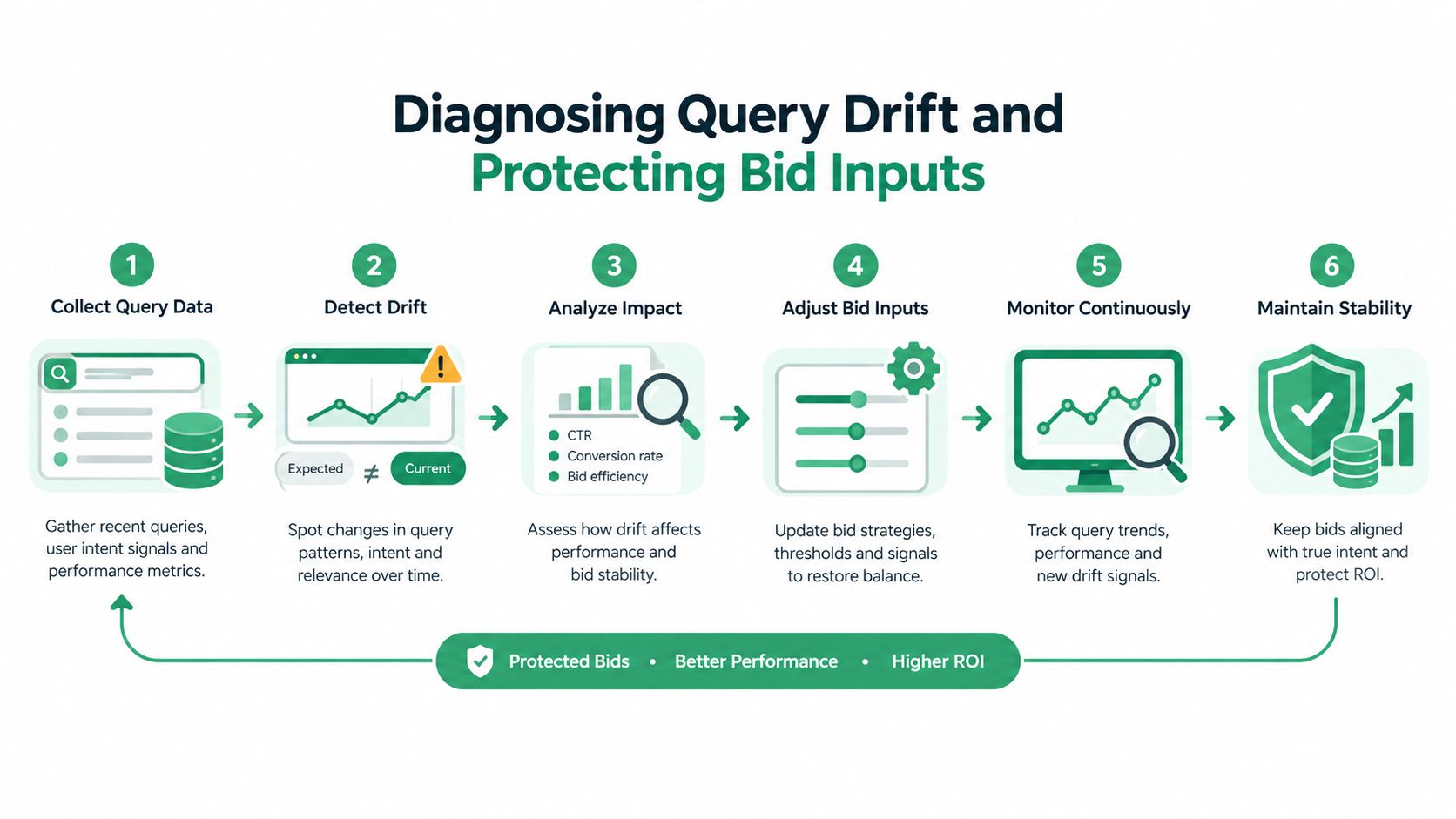
The operating principle is simple: don't ask the bidding model to solve a traffic-quality problem. Give it cleaner inputs, preserve the evidence behind every exclusion, and review the effect after the change.
Enforcing Approval Gates and Auditability
An AI agent with write access can save time, but unrestricted write access turns a useful assistant into an unaccountable operator. The safe design is not “AI suggests, human does everything manually.” It is AI prepares a bounded change, a human approves the exact diff, and the system records the result.
That distinction becomes critical when an agent wants to pause campaigns, move budgets, change match settings, or alter audience controls. A sentence such as “I optimized the account” isn't an audit trail. A useful record shows the original value, proposed value, reason, evidence, approver, execution status, and reversal action.
Treat every write as a controlled transaction
An approval flow with four stages:
- Read: The agent retrieves current account state and relevant performance context.
- Draft: It proposes a specific action, not a vague recommendation.
- Approve: A named user accepts, edits, or rejects the diff.
- Execute and log: The system applies the approved change and stores the result.
For example, a budget proposal should identify the source campaign, destination campaign, current allocations, proposed allocations, business objective, and guardrails. A pause request should show the triggering evidence and identify dependent campaigns or ad groups that could be affected.
The interface can be conversational, but the controls must be operational. A chat approval should not hide the underlying API action. It should expose it in a form that a second reviewer can understand later.
Make reversal part of the original design
Rollback shouldn't depend on remembering the previous setting or searching through screenshots. Each write should create a reversible record that lets an authorized user restore the prior state with one deliberate action.
The workflow also needs limits. Define which changes an agent may draft, which require approval, and which are prohibited entirely. Budget changes, campaign pauses, conversion settings, location targeting, and account-level exclusions deserve stricter treatment than report generation or read-only diagnostics.

Use Meta Ads MCP workflows as a useful reference for how approval-gated actions can separate account inspection from execution. The same principle applies across platforms, even when each platform exposes different controls.
A weekly change-log review should answer three questions:
- What changed: Which campaigns, ads, keywords, audiences, or budgets were modified?
- Why it changed: Which data and business rule supported the decision?
- What happened next: Did the intended outcome occur, and is the change still appropriate?
Auditability isn't paperwork added after automation. It's the mechanism that makes automation safe to scale.
Unifying Platforms with Model Context Protocol
Cross-platform PPC diagnosis fails when the operator has to reconstruct the account from disconnected dashboards. Google Ads may show query and auction behavior, Meta may show audience and creative delivery, analytics may show site actions, and the CRM may reveal whether leads became viable opportunities. Looking at each source separately makes causal analysis slower and encourages channel-level decisions based on incomplete evidence.
Model Context Protocol, or MCP, provides a practical way to connect an AI client with specialized tools and data sources. An MCP server can expose read functions for Google Ads, Meta Ads, analytics, search data, or CRM records, while separate write tools can enforce approval before any live campaign change.
Use a layered architecture
A dependable implementation separates four concerns:
- Context sources: Ad platforms, analytics, Search Console, CRM, product data, and business rules.
- MCP servers: Platform-specific connectors that retrieve current data and expose controlled operations.
- AI client: An interface such as Claude, Codex, Cursor, or another MCP-compatible assistant.
- Governance service: Identity, permissions, approval status, diffs, logs, and rollback records.
The AI client shouldn't receive unrestricted credentials and improvise API calls. It should call named tools with defined inputs and outputs. A diagnostic tool might return campaign spend, search terms, conversions, and status. A proposed write tool should return a diff and wait for approval before execution.
This architecture also makes account boundaries clearer. An agency can restrict an agent to a client workspace, allow read access across connected sources, and permit writes only for approved action types. The permission model becomes part of the account operating procedure rather than an informal instruction in a prompt.
Correlate the business signal
The value of MCP isn't just fewer browser tabs. It allows one diagnostic session to connect a paid query with analytics behavior and CRM quality. If a campaign appears efficient in the ad platform but sales rejects the resulting leads, the agent can flag the disagreement instead of recommending more spend.
A unified session can also connect organic query patterns with paid search coverage, compare landing-page behavior with ad intent, and identify whether a budget move would only shift low-quality demand between platforms.
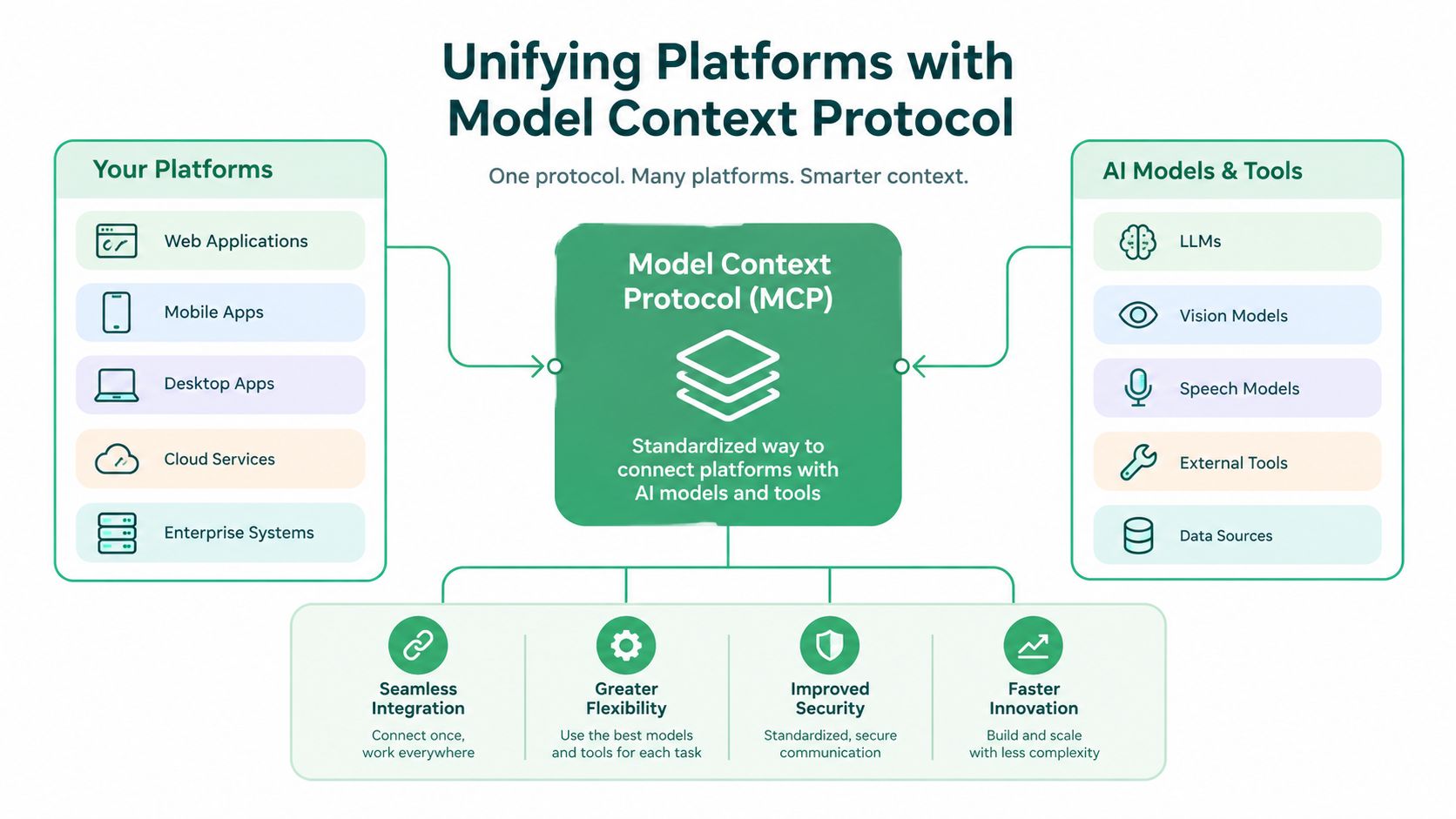
An overview of MCP connectivity for advertising and analytics workflows shows the broader pattern: keep the model flexible, keep platform actions explicit, and place permissions between the conversation and the live account.
MCP doesn't make an AI agent correct by itself. It gives the agent timely context and structured tools. The governance layer determines whether the resulting action is safe to execute.
Adapting to AI Search and Privacy Fragmentation
Paid search now operates in a less predictable results environment. AI-generated answers can occupy attention before a user reaches a conventional result, while privacy constraints reduce the signals advertisers can use to connect an impression with a later business outcome.
A September 2025 study reported that Google AI Overviews reduced paid-search click-through rates by 68% on queries where they appeared. Independent coverage also reported paid CTR at 9.87% with an overview compared with 21.27% on the same queries without one. The analysis of paid search in the answer-engine era shows why campaign settings alone can't explain performance shifts when the search results page itself changes.
The operational response is segmentation, not blanket budget reduction. Separate informational, mixed-intent, navigational, and transactional query classes. Then compare impression share, CTR, CPC, conversion rate, and downstream value within each class and against the presence of AI-generated search features.
Align platform reporting with business evidence
Platform ROAS remains useful for optimization, but it shouldn't be the only definition of success. In a privacy-conscious environment, reported conversions may be modeled, delayed, deduplicated differently, or disconnected from lead quality. First-party analytics and CRM records can add the missing business context.
A practical measurement layer should connect:
- Search context: Query class, SERP features, device, geography, and landing page.
- Media outcome: Spend, impressions, clicks, CPC, conversions, and platform-attributed value.
- Owned measurement: Analytics sessions, engaged actions, form quality, and assisted behavior.
- Commercial outcome: Qualified leads, pipeline movement, revenue, margin, or customer status.
Teams adapting to AI-mediated search can use Scéaled's AI search guide for additional context on how Google search presentation is changing. The important PPC decision remains internal: identify which query classes still generate commercially valuable clicks, then allocate budget according to verified business outcomes rather than a blended platform average.
This approach also protects against false efficiency. If surviving clicks become more concentrated around high-intent queries, the account may show better conversion quality while losing upper-funnel discovery. That can be desirable for a margin-focused campaign, but it should be an intentional choice, not an accidental consequence of reduced visibility.
Deploying Your AI Agent Playbook
Safe deployment starts with observation. Don't connect an agent and immediately grant it permission to edit budgets across every account. Build evidence, define boundaries, and expand authority only after the team can explain the agent's recommendations.
Start with read-only diagnostics
Connect one representative account and ask the agent to produce:
- A spend-at-risk list ranked by likely impact.
- Search-term clusters that need review.
- Budget pacing and delivery anomalies.
- Conversion-tracking inconsistencies.
- Campaigns with unclear goals or conflicting settings.
- A list of proposed fixes with supporting evidence.
Have a practitioner validate the findings against the platform interface, analytics, and CRM. This stage tests data access, account scoping, terminology, and the agent's ability to distinguish a real issue from a normal learning pattern.
Move to drafted fixes
Next, allow the agent to prepare changes without publishing them. Require every draft to include the affected entity, current state, proposed state, rationale, evidence, expected risk, and rollback action.
Use this stage to standardize review language across the team. A reviewer should be able to reject a proposal because it violates a business rule, not because the agent failed to explain itself.
Introduce bounded writes
Grant approval-gated execution for low-risk, well-understood operations first. Keep campaign pauses, conversion settings, account-level targeting, and material budget changes behind stricter approval requirements. Store the change history outside the ad-platform interface so a platform UI change won't erase your operational record.
A useful review cadence includes:
- Daily checks: Spend anomalies, broken delivery, urgent query drift, and unexpected status changes.
- Weekly review: Approved diffs, reversals, negative-keyword quality, and business outcomes.
- Monthly assessment: Whether the agent is improving efficiency, reducing manual work, and preserving account strategy.
Scale from one account to a small group only after the workflow works consistently. Then add connectors for analytics and CRM, because an agent that can see spend but not lead quality will optimize an incomplete objective.
The goal isn't full autonomy. It's a controlled system where AI handles repetitive analysis and prepares precise actions, while people retain responsibility for commercial judgment and irreversible decisions.
NotFair provides hosted MCP servers that connect AI assistants with advertising, analytics, and CRM platforms for live diagnostics, approval-gated campaign changes, explicit diffs, logged history, and one-call undo. Visit NotFair to evaluate a governed workflow for your Google Ads and Meta Ads operations before expanding agent access across accounts.