

Most advice about how to make Facebook increase likes starts in the wrong place. You're told to post more, invite everyone you know, and ask for likes in every caption. That advice can lift a visible count while filling your audience with people who'll never buy, book, share, or come back. Meta has also merged most Page likes into follows, so the number worth managing today is Page followers, not a legacy like total.
That distinction matters because a follow is an ongoing distribution choice. Facebook reported more than 1.13 trillion total likes accumulated since the feature launched in February 2009 by September 14, 2012, according to Facebook's 1 billion users fact sheet. That scale proves people tap buttons easily. It doesn't prove they trust your business.
Don't buy likes, run follow-for-follow loops, or judge a campaign by cost per like alone. The eight tactics below split into free fixes, owned-channel promotion, community work, and paid tests you can approve, pause, and reverse. Each one aims to reach relevant audiences across social platforms and convert attention into followers who stay, engage, and take a next step you can measure.
Table of Contents
- 1. Run Meta Ads Aimed at Page Follows and Engagement
- 2. Optimize the Page Profile for Follow Conversion
- 3. Publish Consistent Native Video and Reels Content
- 4. Cross-Promote the Page Across Owned Channels
- 5. Build Engagement Through Facebook Groups and Comments
- 6. Partner With Complementary Brands Creators and Customers
- 7. Retarget and Build Lookalike Audiences From Existing Customers
- 8. Measure Test and Iterate With Page and Ads Analytics
- How the 8 Facebook growth tactics compare on cost, speed, and fit
- Turn Eight Tactics Into One Follow-Growth Routine
1. Run Meta Ads Aimed at Page Follows and Engagement
Paid promotion is the fastest way to reach people who don't follow you yet, but it's also the fastest way to waste budget on low-intent follows. Use an engagement or Page-growth goal only when your Page already explains who you help and what followers get each week. If the destination is weak, you're paying to expose a weak pitch.
Say a bakery runs a 14-day Reels ad to people interested in local food within a 10-mile radius. The creative shows a Saturday bake, names the neighborhood, and promises a weekly menu post for followers. A B2B SaaS company needs a different hook, such as a short tutorial promoted to people interested in similar software categories, with education content waiting on the Page.
How I'd Structure the Test
Start small, with two or three audience segments and a clear kill rule before you launch.
- Split by intent: Test one broad local or interest audience against one warmer audience, then stop the weakest after several days of data.
- Lead with value: Put the specific benefit in the first three seconds of video, not your logo or a generic introduction.
- Track quality: Compare cost per follower, cost per click, unfollows, and later engagement, not follower count alone.
- Exclude current followers: Don't pay prospecting rates to reacquire people already connected to the Page.
Practical rule: A cheap follow that never engages again costs more than an expensive follow that clicks, books, or buys.
Treat this as spending at risk until downstream behavior proves value. A benchmark discussion of Facebook engagement tactics reports an average engagement rate of approximately 0.15% when reactions, comments, and shares are divided by page fans, cited by Top Marketing Funnels' benchmark guide. Judge ads by qualified sessions, leads, or purchases after the follow. For controlled execution, the Meta Ads MCP connection for approval-gated campaign work fits the same principle, read first, approve changes, and keep edits reversible.
2. Optimize the Page Profile for Follow Conversion
A visitor decides in seconds whether your Page looks credible, current, and useful. Empty About fields, old hours, a broken call-to-action button, or a cover image from last season creates friction before your content gets a chance. Profile optimization costs nothing, and it improves every other tactic because paid clicks, shares, and referrals all land here.
The image below captures the shopfront test you should apply to your own Page.
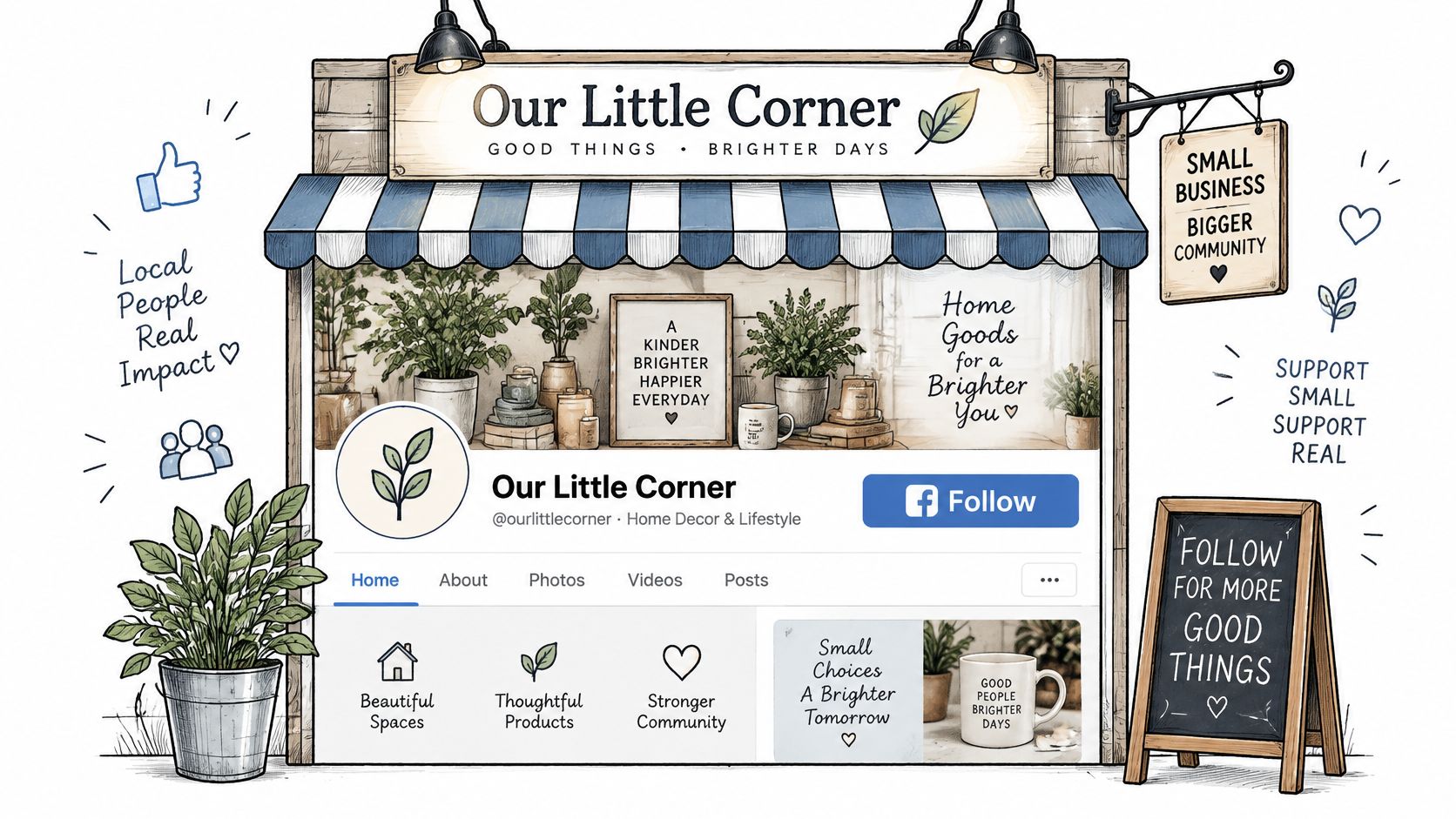
Say a fitness studio adds its class schedule, pins a welcome video, and switches its button to Book Now so visitors reach its booking page without searching. An ecommerce brand can pin shipping and return policies and update its cover to the current collection. Both changes answer the visitor's real question, which is whether following will make a future decision easier.
The Mobile Visitor Audit
Open the Page on your phone while logged out, or view it as a visitor. Read only what fits above the first scroll and decide whether a stranger can name your category, location or market, and next action. If they can't, fix the profile before you increase posting volume.
- Pin the follow case: Use one post that states a concrete benefit, such as Tuesday price drops, monthly live Q&As, or short repair tips.
- Match your identity: Keep name, logo, tone, and offers consistent with your website and other profiles.
- Audit quarterly: Remove expired offers, old links, and outdated hours before they undermine trust.
For a broader setup checklist, see Scheduler.social's guide to Facebook audience growth. Then measure Page visits against new follows each month. If visits rise but follows don't, your profile pitch is the bottleneck, not your reach.
3. Publish Consistent Native Video and Reels Content
Reels give a small Page a route to non-followers that a static announcement rarely gets. Upload video natively, make the point without sound, and give viewers a reason to follow for the next installment. Consistency helps because viewers and Facebook's distribution system both learn what your Page reliably provides.
This illustration shows the format to prioritize, a person speaking directly to camera with captions doing real work.
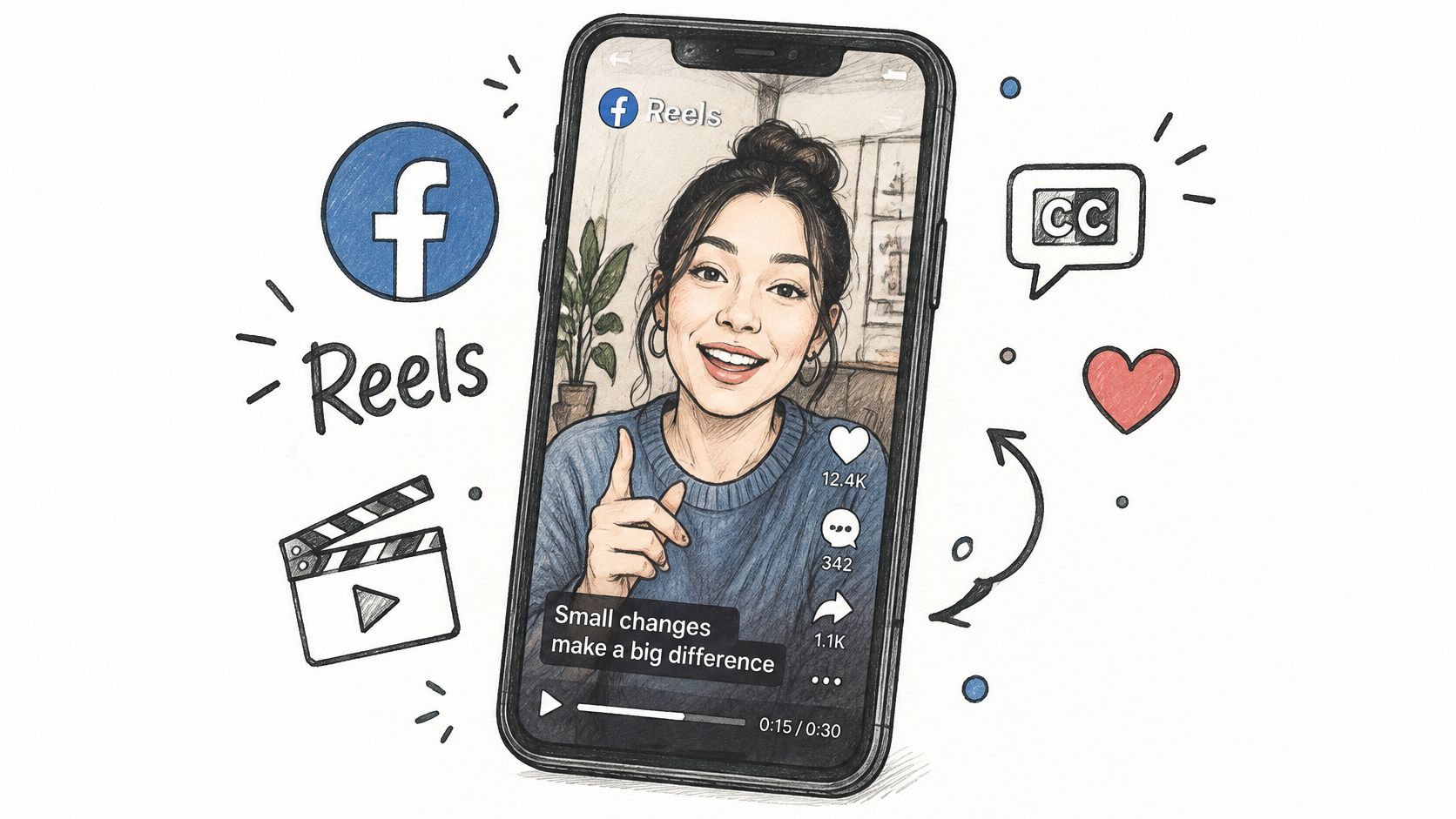
Say a home-improvement contractor posts 30-second before-and-after Reels, with each caption explaining one technique and one mistake to avoid. A software company can publish two short walkthroughs weekly, each solving one workflow problem and pointing to a longer tutorial. Neither approach needs a studio. Both need firsthand detail your competitors can't copy by reposting a template.
Originality is now more than a creative preference. Reporting on Facebook's 2025 changes describes stronger restrictions on repeatedly reused or unoriginal content, including reduced distribution and possible loss of monetization access, covered by Social Media Today's report on unoriginal content. Adapt cross-platform ideas with your own demonstration, customer evidence, local context, or commentary instead of uploading the same clip unchanged.
Build a Sustainable Cadence
Batch-record several short videos around recurring customer questions. Hook viewers in the first second, use captions, and end with a relevant question or a promise tied to the next video. Don't use mechanical engagement bait as a substitute for a genuine prompt.
The video below is useful as a production reference when you're planning hooks and pacing.
Compare watch-through rate, shares, profile taps, and follows by format in Insights. Reuse a proven organic Reel as ad creative only after it earns attention without paid help. Metricool reports Facebook reach increased by 51% in 2025, while impressions and interactions each increased by 56%, according to Metricool's 2026 social media statistics report. More available reach still doesn't excuse generic content.
4. Cross-Promote the Page Across Owned Channels
Your cheapest followers already recognize your name. Website visitors, email subscribers, customers, event attendees, and audiences on Instagram or YouTube don't need a cold introduction. They need a specific reason to add your Facebook Page to the places they already hear from you.
This diagram shows the simple flow, owned attention moving into one community destination.
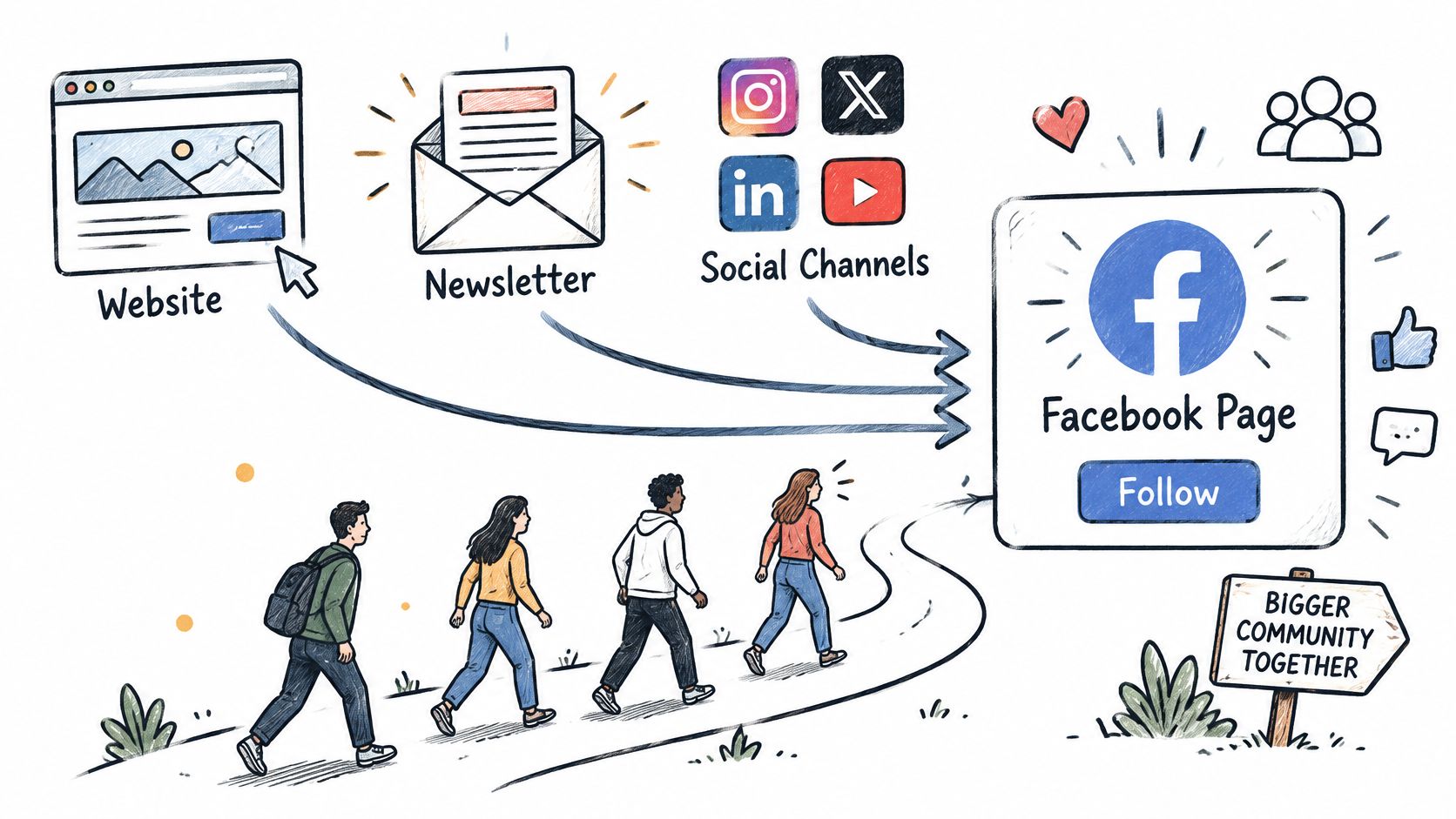
Say a restaurant adds “Follow us for weekly menu drops” to its website banner and receipt footer. That's stronger than a bare Facebook icon because it sells the benefit. A nonprofit can feature a useful Facebook Live Q&A in its newsletter, then invite subscribers to follow for future sessions and reminders.
Place Prompts Where Intent Is High
Order confirmations, post-purchase emails, help articles, packaging inserts, and event follow-ups reach people while your value is fresh. A footer link alone is easy to ignore. Pair the prompt with content that's genuinely easier to get on Facebook, such as live answers, restock alerts, owner updates, or community discussions.
- Write the benefit in one sentence: “Get the Friday stock list before it sells out” beats “Like us on Facebook.”
- Make one thing exclusive: Host a monthly live session or early announcement only on the Page.
- Track placements in GA4: Use tagged links where possible so you can see which owned channel sends visitors who convert.
Used well, social media cross posting saves production time, but don't publish identical copy everywhere and call it promotion. Adapt the opening line and format for each channel, then direct people to the Facebook discussion, video, or event that gives the follow a purpose.
5. Build Engagement Through Facebook Groups and Comments
A Page that only broadcasts gives strangers little evidence that real people care. Groups and comments supply that evidence, but they demand staff time and restraint. If you join external Groups only to drop links, moderators will remove you and members will remember the behavior for the wrong reason.
Say a running shoe brand links a Group to its Page, posts weekly training prompts, and invites members to share logs and injury-prevention questions. Staff participate as knowledgeable hosts, not sales reps. A small accounting firm can answer tax questions in local business Groups without pitching services, earning profile visits because the answers are useful.
Earn the Follow After the Conversation
Read each Group's rules before posting. Answer the question in the thread, disclose your role when relevant, and link only when the rules allow it and the resource directly helps. On your own Page, reply within a set window, even when a short acknowledgment is all you can offer that day.
- Ask answerable questions: “Which delivery day causes you the most trouble, Monday or Friday?” invites a real operational reply.
- Recognize contributors: Thank members who help others and feature strong answers with permission.
- Turn repeats into content: Frequent Group questions become Reels, status posts, and pinned resources.
Comments are not decoration. They're the public record that your business listens and knows its subject.
Don't dismiss text-led posts while chasing video. Facebook Status-post engagement increased from 0.15% in 2024 to 0.20% in 2025, according to statistics attributed to Socialinsider in SocialPilot's Facebook statistics roundup. A sharp question aimed at the right community can produce better follow intent than a polished announcement nobody discusses.
6. Partner With Complementary Brands Creators and Customers
Partnerships borrow trust, not just reach. A smaller partner whose audience matches your buyer can outperform a large creator whose followers want unrelated entertainment. Vet overlap, comment quality, and past sponsorship fit before you look at follower count.
The live format below works because both hosts bring a relevant audience and a shared reason to watch.
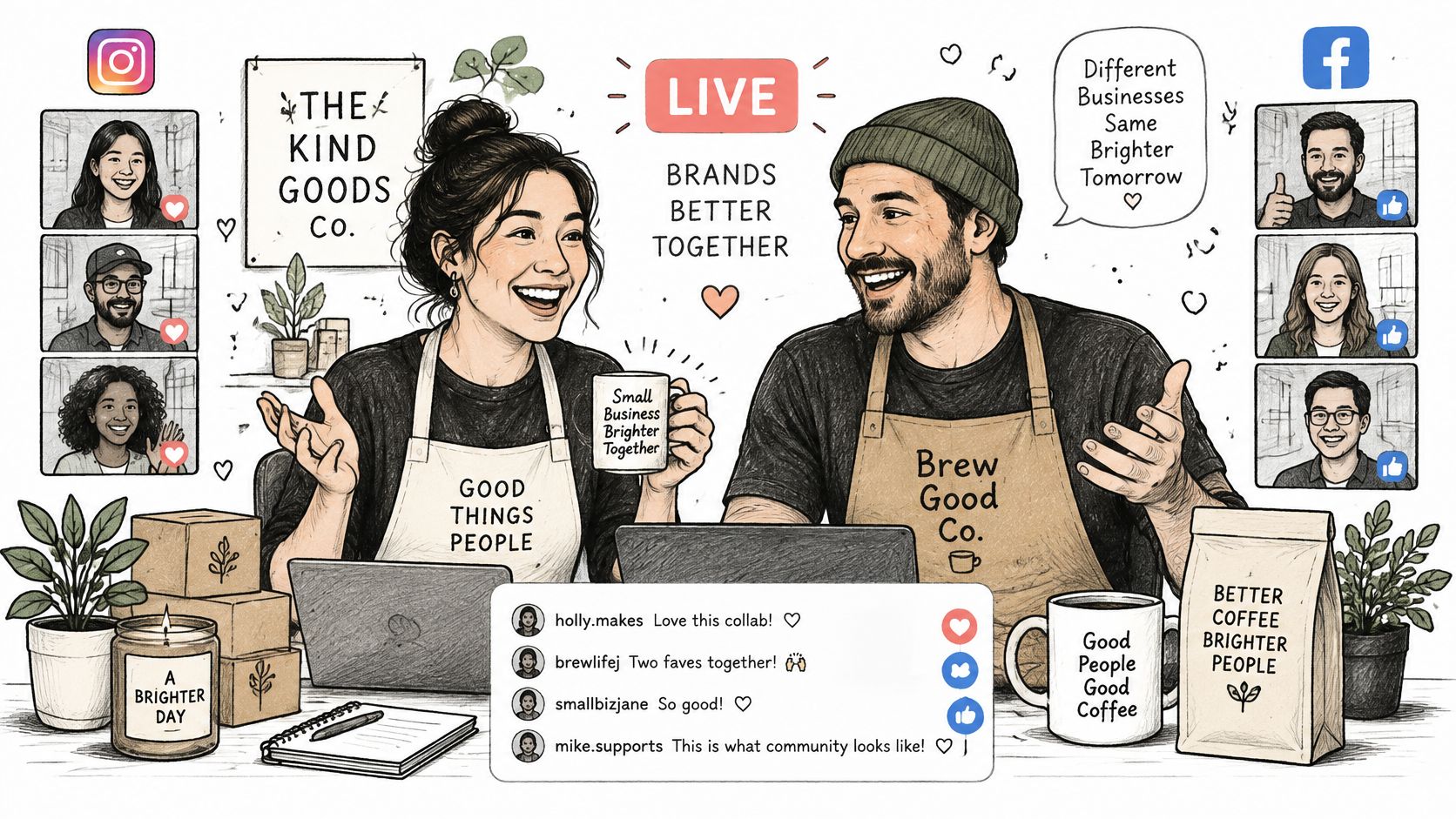
Say a coffee roaster co-hosts a brewing session with a local bakery. Each Page promotes the event to its own followers, both answer questions live, and the replay becomes short clips for the following week. A skincare brand can run customer spotlights with credited reviews and real routines, which gives prospective followers evidence rather than claims.
Set Terms Before Production Starts
Agree who owns the footage, who can boost it as an ad, how long usage lasts, and how sponsorship disclosures will appear. Put the follow call to action in context, such as inviting viewers to follow both Pages for a parts-two demonstration. Don't make liking or following a condition of giveaway entry, and check current Meta Promotion Guidelines before any contest.
- Choose adjacency over size: A bike fitter pairs better with a cycling shop than with a generic lifestyle creator.
- Repurpose with permission: Strong partner clips can become prospecting creative after the organic response proves the hook.
- Measure cross-over quality: Track new follows, saves, qualified clicks, and 30-day retention by partner.
The trade-off is coordination time. A simple customer spotlight may beat a complex multi-brand giveaway because it's repeatable, credible, and easy to approve. I recommend starting with one partner, one format, and one shared metric before building a larger creator program.
7. Retarget and Build Lookalike Audiences From Existing Customers
Warm audiences usually give you better follower quality than broad interest targeting because relevance is already established. Custom Audiences can be built from website visitors, email lists, app users, and customer files, subject to consent and platform rules. Lookalike Audiences then extend a strong seed to new people with similar characteristics.
Say an online retailer builds a 1% Lookalike from recent purchasers and runs a follow-focused ad announcing early access to product drops. A SaaS company can retarget trial users who viewed pricing with a short product-update video and an invitation to follow for release notes. The follow request works because it continues an existing relationship.
Protect the Seed Audience Quality
Your Lookalike can't repair a weak seed. Start with high-value customers, repeat buyers, qualified leads, or engaged subscribers rather than every email address you've collected. Refresh lists regularly and separate recent purchasers from older contacts when volume allows.
- Start narrow: Test a 1% Lookalike first, then compare 3% and 5% only if follower quality holds.
- Exclude existing followers and buyers: Prevent prospecting spend from recycling people who need a different message.
- Cap frequency: Warm audiences are finite, and repeated follow requests create fatigue quickly.
- Change the creative by temperature: Retargeting can reference product education or updates, while Lookalikes need a clear category hook.
The risk is confusing familiarity with intent. A pricing-page visitor may follow for a discount and never return, so compare later clicks, trials, purchases, and unfollows by audience. Pause or reverse budget shifts when a broader Lookalike lowers downstream conversion, even if its cost per follower looks attractive in Ads Manager.
8. Measure Test and Iterate With Page and Ads Analytics
Growth becomes manageable when you stop asking whether the follower total rose and start asking which audience, format, and promise produced followers who stayed. Meta Business Suite and Page Insights show reach, follower movement, and post performance. Ads Manager adds cost per result and creative-level evidence for paid tests.
Benchmarks help only when you compare like with like. Dash Social reports growing brands with 0 to 100,000 followers achieved a 1.1% monthly audience-growth rate, compared with 0.2% for established brands and 0.04% for large brands, in Dash Social's 2025 benchmark report. A mature Page shouldn't chase a small Page's growth percentage by buying reach it doesn't need.
Run One Useful Test at a Time
Say a team tests two video hooks against the same audience, budget, and destination. One produces cheaper follows but weak profile clicks and fast unfollows, while the other costs more and drives demo-page visits. The second hook wins for that business. Roll its opening structure into organic content, then test posting time or caption format next.
- Define follower quality first: Local businesses may track calls and direction taps, ecommerce may track product visits, and SaaS may track qualified sessions or demo requests.
- Review sources and retention: Separate organic, owned, partner, and paid follows so one strong channel doesn't hide weak cohorts.
- Document every change: Record the hypothesis, date, spend, result, and next decision in a simple weekly log.
- Let tests finish: Give paid tests enough delivery to exit learning before you declare a winner.
Raw reaction growth can still mislead you. Facebook posts averaged 255 likes in 2025, up from 155 in 2024, a 64% year-over-year increase, according to Socialinsider's analysis of 71.9 million Facebook posts cited in Socialinsider's social media benchmarks. Track likes beside shares, comments, clicks, and conversions. For platform-level reporting and controlled changes, the Meta Ads platform documentation for connected campaign operations supports a read, approve, and undo workflow rather than unreviewed edits.
How the 8 Facebook growth tactics compare on cost, speed, and fit
| Tactic | Cost | Speed of Results | Best For |
|---|---|---|---|
| Run Meta Ads Aimed at Page Follows and Engagement | Paid; depends on budget and ad performance | Fast and measurable | Reaching targeted audiences beyond existing followers |
| Optimize the Page Profile for Follow Conversion | Free | Quick to implement; impact depends on Page traffic | Converting visitors into followers |
| Publish Consistent, Native Video and Reels Content | Low cost, with ongoing production time | Gradual and unpredictable | Building organic reach with useful or entertaining content |
| Cross-Promote the Page Across Owned Channels | Very low cost | Fast to deploy | Turning existing customers and audiences into followers |
| Build Engagement Through Facebook Groups and Comments | Mainly staff and moderation time | Slow to build | Strengthening community and customer relationships |
| Partner With Complementary Brands, Creators, and Customers | Varies; requires coordination | Moderate; depends on partner reach | Reaching relevant audiences through trusted partners |
| Retarget and Build Lookalike Audiences From Existing Customers | Paid; requires usable audience data | Potentially fast | Reaching warm prospects and people similar to customers |
| Measure, Test, and Iterate With Page and Ads Analytics | Staff time; analytics tools may add cost | Ongoing; improves results over time | Identifying effective tactics and reducing wasted effort |
Turn Eight Tactics Into One Follow-Growth Routine
Start with the free bottleneck you control today. Open your Page as a first-time mobile visitor and fix the category, About copy, hours, call-to-action button, cover image, and pinned post. Write one sentence that tells the right person what they'll get by following, then make sure your next four posts prove that promise. If that sentence sounds like “great content and updates,” it isn't specific enough.
Next, build a weekly cadence you can sustain without lowering quality. Batch two or three native Reels around real customer questions, publish one discussion-led post, answer comments within your stated window, and spend focused time in one relevant Group. Add one owned-channel prompt where intent is already high, such as a post-purchase email or help page. That's enough activity for most small teams to learn which topics earn profile visits and follows.
Add partnerships and paid spend only after the organic destination converts. Choose one complementary brand, creator, or customer format and agree on disclosure, usage rights, and one shared outcome before production. For paid growth, launch a small test against a warm Custom Audience or a narrow Lookalike, exclude existing followers, and set your stop rule in advance. Judge the result by spend at risk, retained followers, qualified clicks, and the business action that matters to your model.
Your measurement routine should fit on one page. Every week, record new follows by source, unfollows, reach-based engagement, top posts by shares and profile taps, cost per follower for paid tests, and downstream calls, product visits, leads, trials, or sales. Every month, compare cohorts instead of totals. Paid followers who disappear quickly need a different audience or promise, while owned-channel followers who keep engaging deserve more exclusive content and earlier access.
Be honest about the ceiling on vanity growth. Facebook's average engagement rate fell 36% in 2024, according to Rival IQ's report analyzing more than 4 million posts and 9 billion interactions, published as Rival IQ's 2025 Social Media Industry Benchmark Report. A rising like count can coexist with weaker audience response. That's why I recommend treating likes as a diagnostic signal inside a post, not as the objective for the Page.
This week, pick one follower-quality metric and make it visible beside follower count in every report. Audit the profile, publish one original Reel that answers a costly customer question, and place one benefit-led follow prompt in an owned channel. If you test ads, make the change small, approved, logged, and reversible. NotFair can be one relevant option for teams that want Meta Ads reads and approval-gated writes in that process, but the discipline matters more than the tool. You'll build a smaller number of better followers at first. That's the trade worth making.
NotFair connects AI agents to Meta Ads and other marketing platforms through hosted MCP servers, so you can review live Facebook campaign performance, diagnose spend at risk, and prepare changes with explicit diffs before anything is approved. Its approval-gated writes, change history, and one-call undo help you test follower-growth ads without handing automation unchecked control of your budget. Visit NotFair to connect your accounts and run your next Meta Ads test with a review step built in.