

It's Monday morning, cost per lead has climbed for weeks, and nobody can explain why without opening Google Ads, Meta, analytics, and the CRM. Search terms suggest wasted spend. Meta reports healthy conversions. Sales says lead quality has slipped, but pipeline updates aren't complete.
Campaign management software should shorten that investigation, not give you another dashboard to reconcile. The right tool helps your team identify the problem, choose an appropriate action, and record what changed. The wrong one duplicates reporting while leaving the difficult decisions in spreadsheets and chat threads.
The distinction matters because automating a channel isn't the same as coordinating channels. In an Ascend2 survey summarized by Search Engine Land, 41% of marketers described customer journeys as mostly or fully automated, compared with 26% for their multichannel strategy.
Buy for the work your team needs to finish, not the number of integrations on the homepage.
The options below fit different operating models: Google-first search teams, Meta-heavy ecommerce businesses, enterprise media programs, and teams adding AI-assisted diagnostics to an existing stack. For creative production and distribution needs, these tools for scaling paid social campaigns provide useful adjacent context.
Pricing models matter as much as features. Spend-based subscriptions, account limits, annual commitments, and enterprise onboarding can change the buying decision, so confirm current terms against your actual accounts before committing.
Table of Contents
- 1. NotFair
- 2. Optmyzr
- 3. Adzooma
- 4. Madgicx
- 5. Bïrch (formerly Revealbot)
- 6. Adalysis
- 7. Google Search Ads 360
- 8. Skai
- 9. Smartly
- 10. AdEspresso
- How the leading campaign management platforms compare on price, free access, coverage, and best fit
- Matching the Tool to Your Team, Not the Feature List
1. NotFair
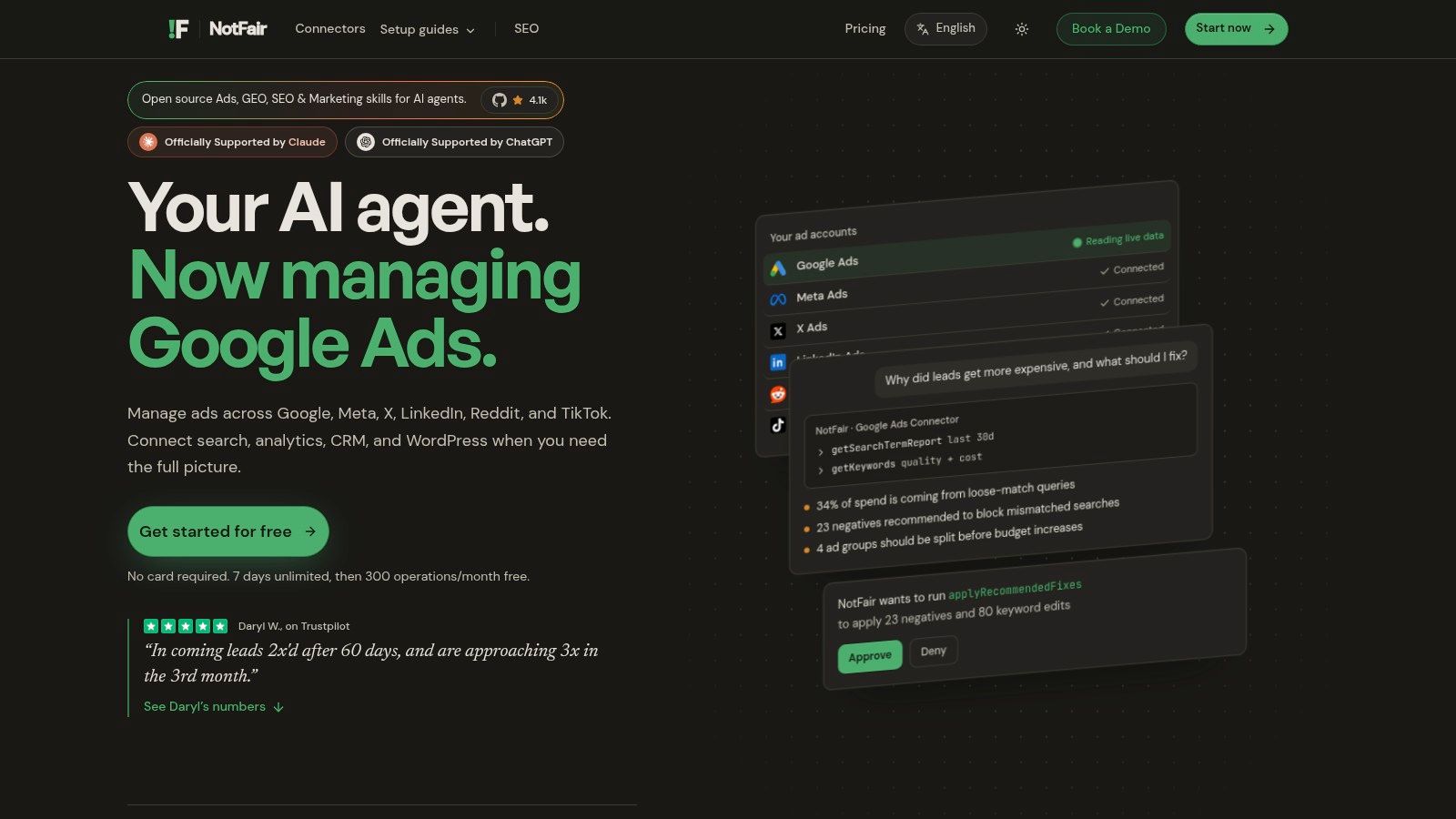
NotFair fits teams that want to investigate campaigns through an AI assistant without replacing their existing platforms. Its hosted Model Context Protocol, or MCP, layer connects compatible AI clients to advertising, analytics, search, and CRM accounts. Marketers can read live account data, investigate loose-match searches, and prepare fixes ranked by spend at risk.
The useful distinction is between diagnosing a problem and executing a change. NotFair previews supported edits for approval, records changes, and offers undo for supported operations. That makes it a candidate for teams that want assistance without handing an agent unrestricted campaign control.
Where the complementary layer helps
Say Google Ads reports deteriorating lead costs while Meta looks stable. A shared investigation can examine search terms, GA4 conversions, Search Console queries, and GoHighLevel pipeline context without requiring someone to assemble exports first. That helps connect channel symptoms, although it doesn't resolve conflicting attribution models automatically.
- Best fit: Agencies and lean growth teams already comfortable working through an AI client.
- Useful safeguards: Explicit edit previews, approval gates, server-side limits, change history, and supported undo operations.
- Important limitation: Read access and write actions vary by integration. A connected platform doesn't imply complete campaign-management coverage.
NotFair offers free and Growth options, with operation allowances and shared-account capacity that should be checked against your workload. It also requires compatible accounts and an AI client, so it isn't a standalone visual campaign builder.
I'd evaluate it alongside, rather than instead of, an established optimizer. Keep your current platform for scheduled rules, campaign construction, or creative workflows; use NotFair to investigate cross-system questions and prepare reviewable actions. Before expanding access, test the supported rollback path on a low-risk edit and confirm client permissions through the NotFair website.
2. Optmyzr
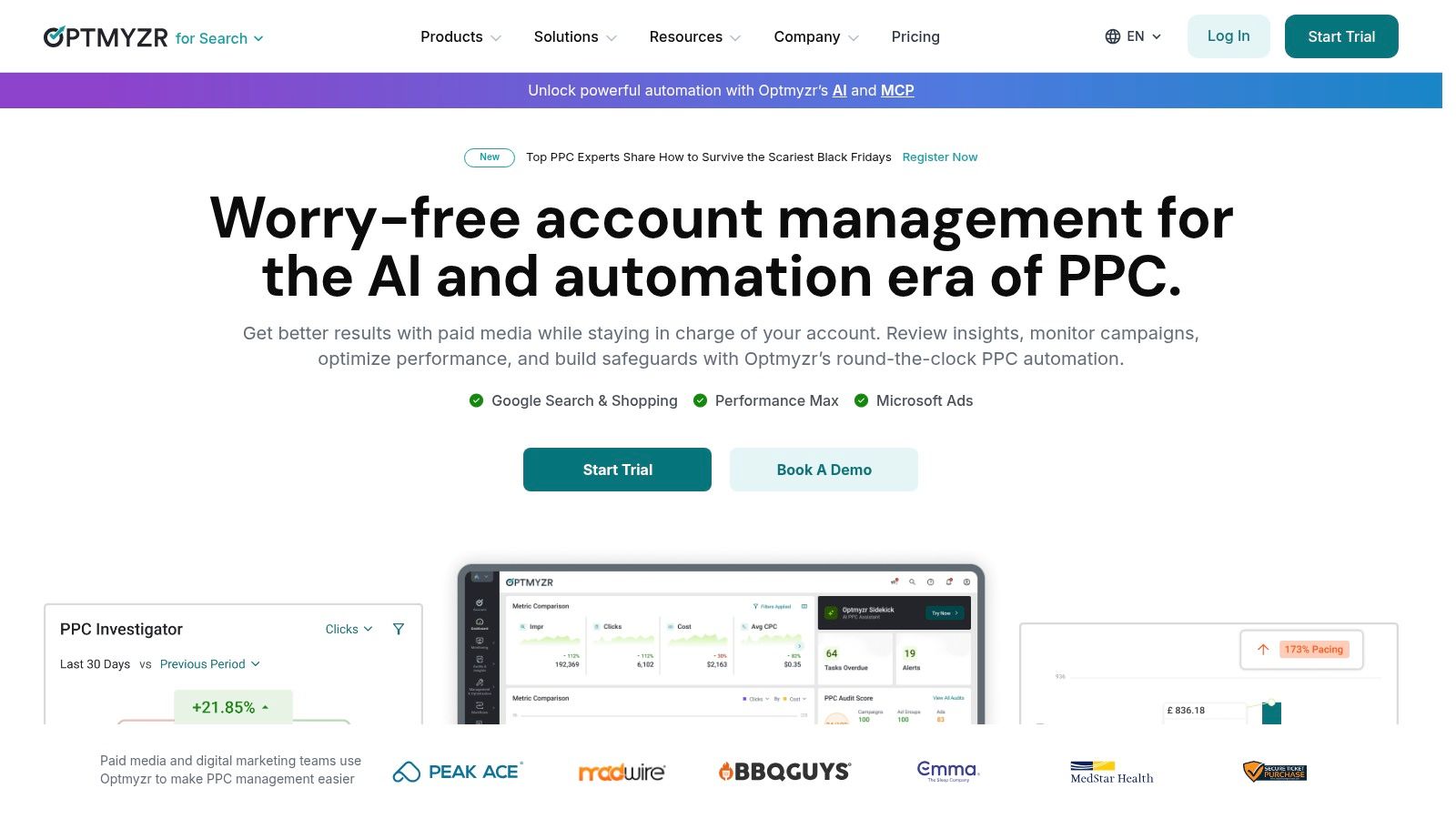
Optmyzr is a strong shortlist candidate when paid-search operations are the main workload. It combines account analysis, recommendations, rules, reporting, and tools for making campaign changes. Its coverage extends beyond Google Ads to Microsoft, Amazon, Meta, and LinkedIn, although feature availability depends on the plan and platform.
For an agency managing recurring optimization across accounts, the attraction is a structured workspace. Specialists can review opportunities and act without rebuilding every workflow from scratch. AI Sidekick and MCP access add AI-assisted options, but those capabilities should support a defined review process rather than replace it.
Test the workflow, not just the recommendation
Use a real search-term problem during evaluation. Check whether the tool exposes enough context to distinguish irrelevant traffic from queries that haven't converted yet; this approach to Google Ads negative keywords illustrates the kind of investigation worth testing.
- Strength: Analysis and execution sit close together, which suits repeatable PPC work.
- Trade-off: Spend-based pricing can change the economics as accounts grow.
- Boundary: Social tools don't make it a replacement for CRM workflows or broader marketing orchestration.
Ask Optmyzr to demonstrate your actual campaign types and required social actions. It's a better fit when specialists need operational depth than when the main requirement is reconciling advertising results with incomplete CRM records.
3. Adzooma
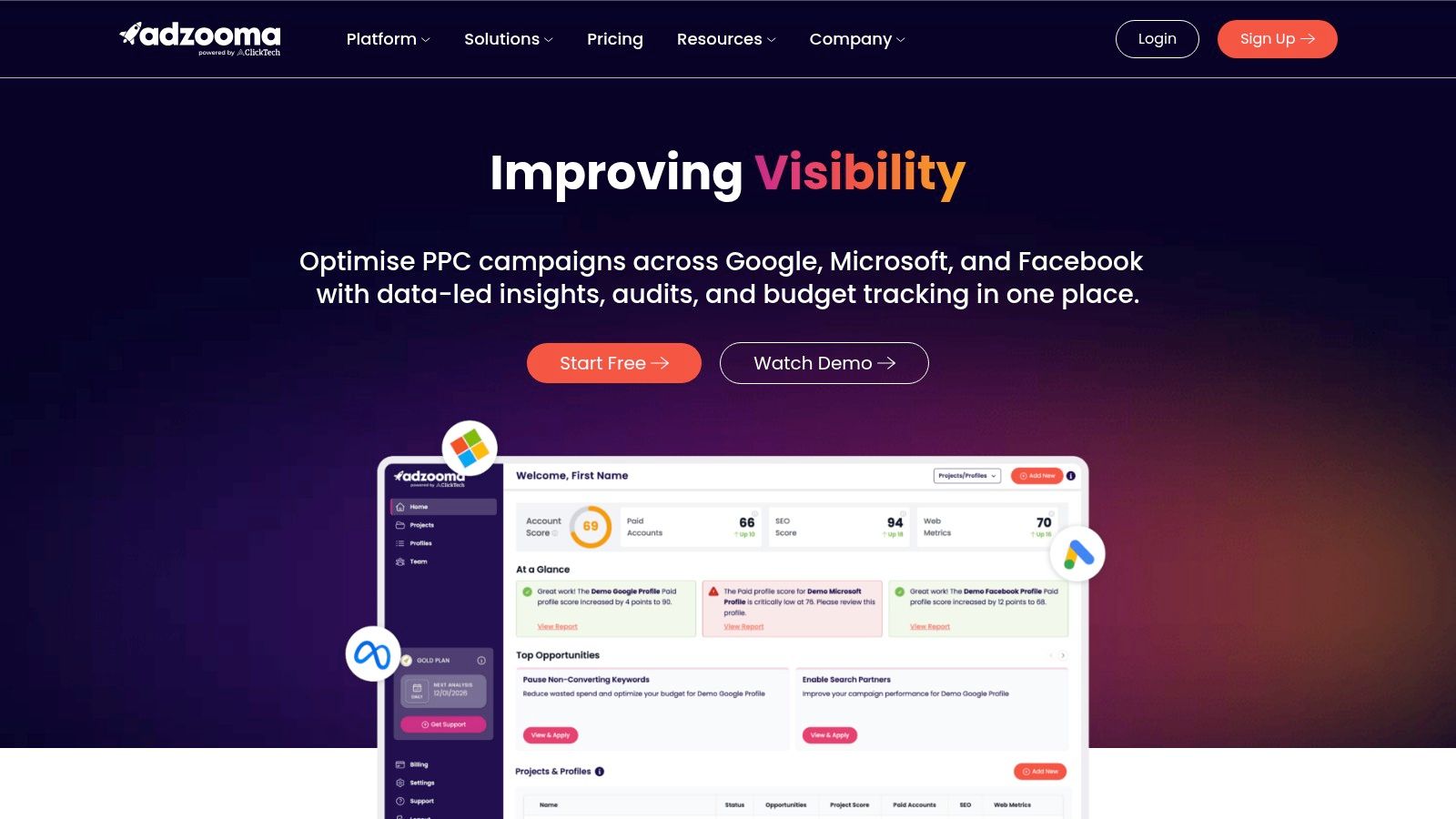
An account manager needs to know which clients require attention before opening every advertising interface. Adzooma suits that monitoring-first operating model, with audits, opportunities, alerts, budget monitoring, and reporting across Google, Meta, and Microsoft Ads.
That's a narrower job than full campaign orchestration, and it can be the right one. A small agency may get more value from consistent account-health checks than from an elaborate automation system nobody has time to maintain. Alerts around CPA, CPC, and spend can help focus daily review.
- Best use: Cross-account triage, budget oversight, and recurring health checks.
- Plan consideration: The free option limits available alerts and optimization opportunities.
- Execution limitation: Confirm that supported actions match how your team edits campaigns.
The practical test is whether an alert leads to a useful decision. A CPA warning should make it easy to inspect the relevant campaign, compare an appropriate period, and establish whether conversion reporting is complete. Otherwise, you've automated notification rather than diagnosis.
Adzooma offers free and paid options, with annual billing on its published paid tiers and enterprise terms by quote. Review the commitment before using it as an agency-wide standard.
I'd favor it for teams seeking visibility before deeper automation. If complex bulk changes or advanced search workflows are the priority, compare its execution tools carefully with a dedicated PPC platform.
4. Madgicx
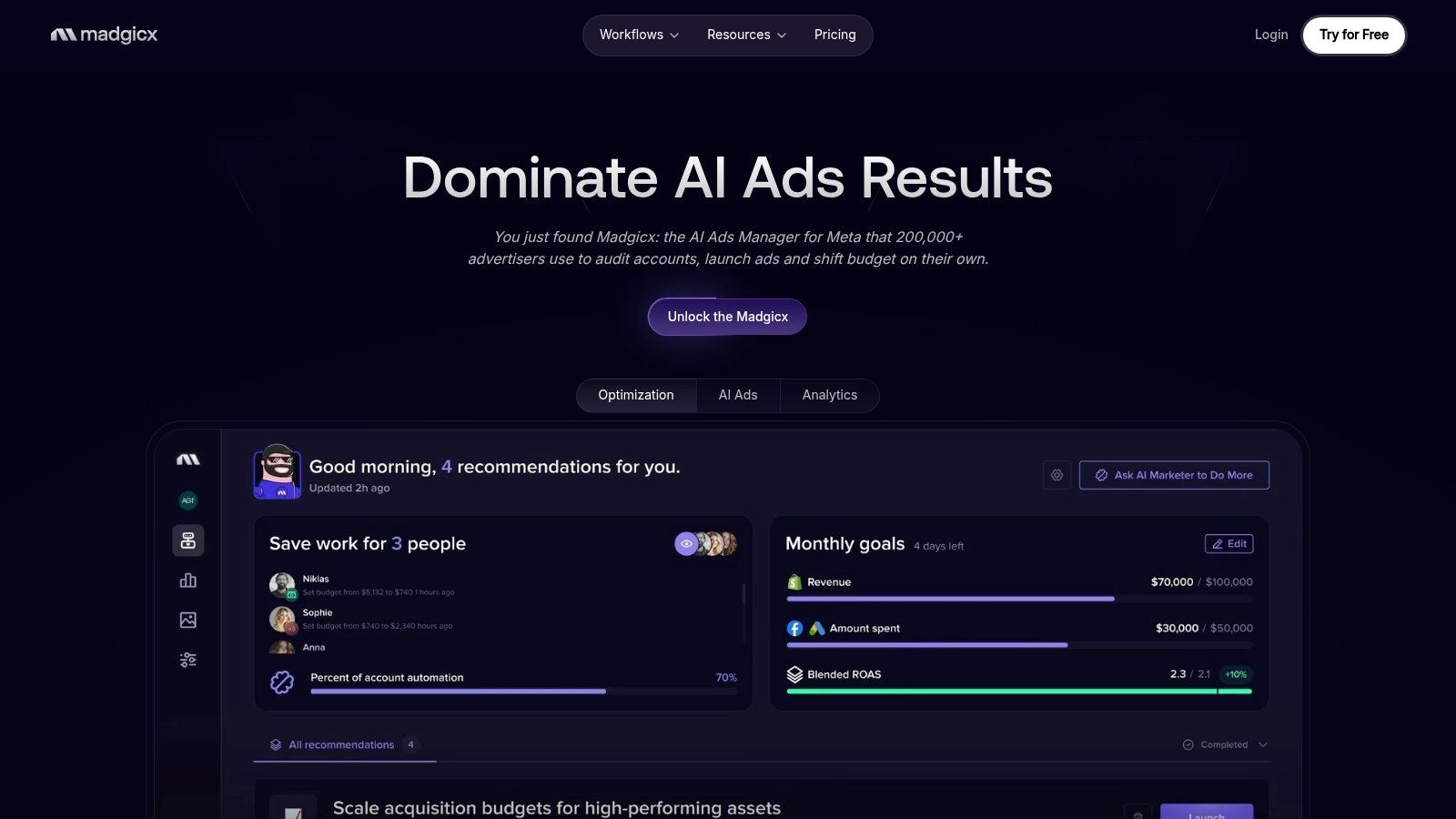
Madgicx belongs on the shortlist for Meta-heavy ecommerce teams, particularly when media buying, creative analysis, and store performance need to be considered together. Its offering combines Meta-oriented campaign management, automation, targeting, creative workflows, and AI recommendations.
Reporting connections can bring advertising data together with sources such as GA4, Shopify, TikTok, and Klaviyo. That context is useful, but reporting coverage shouldn't be confused with equivalent execution depth across every connected channel. It isn't a like-for-like Google-and-Meta operations platform.
Choose between creative operations and conversational diagnosis
For a store testing fresh creative while managing Meta budgets, Madgicx's broader workflow may fit better than a chat-based interface alone. If the team already has creative production covered and mainly needs account investigation plus reviewable edits, a Meta Ads MCP layer addresses a different, potentially complementary need.
- Strong fit: Ecommerce teams whose buying decisions revolve around Meta performance and creative iteration.
- Cost consideration: Plan pricing depends on Meta spend, and additional account requirements can affect the total.
- Weak fit: Search-led teams looking primarily for detailed Google Ads campaign operations.
During a Madgicx evaluation, follow a creative from analysis through launch and subsequent optimization. Check whether the platform makes that handoff easier for both the buyer and the creative team.
Don't choose it solely because several data sources appear in a dashboard. Choose it when its Meta-centered operating workflow matches how your team produces and manages advertising.
5. Bïrch (formerly Revealbot)
A buyer repeatedly checks pacing, pauses underperformers, and applies familiar budget adjustments. Bïrch fits when those decisions can be expressed as clear rules. It supports advertising workflows across Meta, Google, TikTok, and Snapchat, with platform-specific differences in available features.
Its tools include automated rules, campaign launching, reporting, custom metrics, and integrations such as Google Sheets and Slack. The benefit is repeatability: teams can formalize operational decisions instead of relying on someone remembering to inspect every account.
Automation boundary: Don't turn a judgment call into a rule until you can explain the exceptions.
A pause condition based on recent acquisition cost needs safeguards around conversion delay, spend, and the evaluation window. A scaling rule also needs boundaries so it doesn't conflict with another automation or an account-level budget constraint.
- Best fit: Teams with documented, repeatable campaign-management procedures.
- Main risk: Poorly configured rules can execute unwanted changes consistently.
- Commercial consideration: Pricing depends on connected-account spend, so model the whole account portfolio.
Ask Bïrch to demonstrate rule behavior using your actual conditions, including what happens when data arrives late or another rule has already changed the campaign. Review notifications and change records as carefully as the rule builder.
Bïrch is less compelling when the unresolved problem is why performance changed. Diagnose that first; automate the response only after the conditions are trustworthy.
6. Adalysis
Adalysis is for search specialists who want recurring diagnostic depth rather than broad channel coverage. It focuses on Google Ads and Microsoft Ads, with account audits, performance monitoring, search-term and keyword analysis, budget forecasts, and campaign-building tools.
That focus is an advantage when most of the team's work involves search-account maintenance. It's a limitation when the same buyer also expects Meta campaign execution. Don't treat a specialist search platform as a cross-channel suite just because both belong to the campaign management software category.
Evaluate the quality of the diagnostic queue
A useful audit should help the buyer prioritize, not merely produce a long list of warnings. Test whether findings expose the affected campaigns, explain the concern, and support a sensible next action. Quality Score analysis and search-term review need context, not automatic acceptance.
- Search depth: Keyword diagnostics, budget projections, Performance Max reporting, and campaign-building workflows.
- Team fit: Agencies and in-house teams with recurring Google and Microsoft account-review responsibilities.
- Trade-off: Spend-based pricing and specialist depth may exceed what a small advertiser needs.
When comparing AI tools for Google Ads, separate conversational assistance from persistent account auditing. They solve related but different problems and may work together.
Use the Adalysis evaluation process to assess how quickly a specialist can move from an audit finding to a justified change. The useful outcome is a better review routine, not a larger warning queue.
7. Google Search Ads 360
Google Search Ads 360 fits enterprise search programs with complex account structures, substantial coordination needs, and established measurement processes. It combines campaign management, bulk operations, reporting, bidding, and budget planning across managed accounts and supported search engines.
The reason to evaluate it isn't just that a Google Ads account has become busy. It's that the organization needs repeatable operations across brands, markets, or business units, often alongside other Google Marketing Platform products. Account hierarchy and governance become part of the buying decision.
- Operational strength: Bulk edits, campaign templates, automated rules, and centralized search workflows.
- Planning fit: Budget plans and machine-learning-assisted allocation for coordinated search programs.
- Channel boundary: It doesn't replace a dedicated Meta campaign-management workflow.
A smaller team may find that the implementation effort outweighs the benefit. Enterprise capabilities only help when someone owns configuration, permissions, measurement alignment, and ongoing platform administration.
Access and commercial arrangements for Google Search Ads 360 run through Google or a platform partner rather than a straightforward low-cost subscription. Include onboarding and internal operating effort in the business case, not just the platform fee.
For evaluation, ask the provider to reproduce a real cross-account change and a budget-planning workflow. Then have the people who will operate the platform assess whether they can understand, review, and maintain the setup without depending on the demo team.
8. Skai
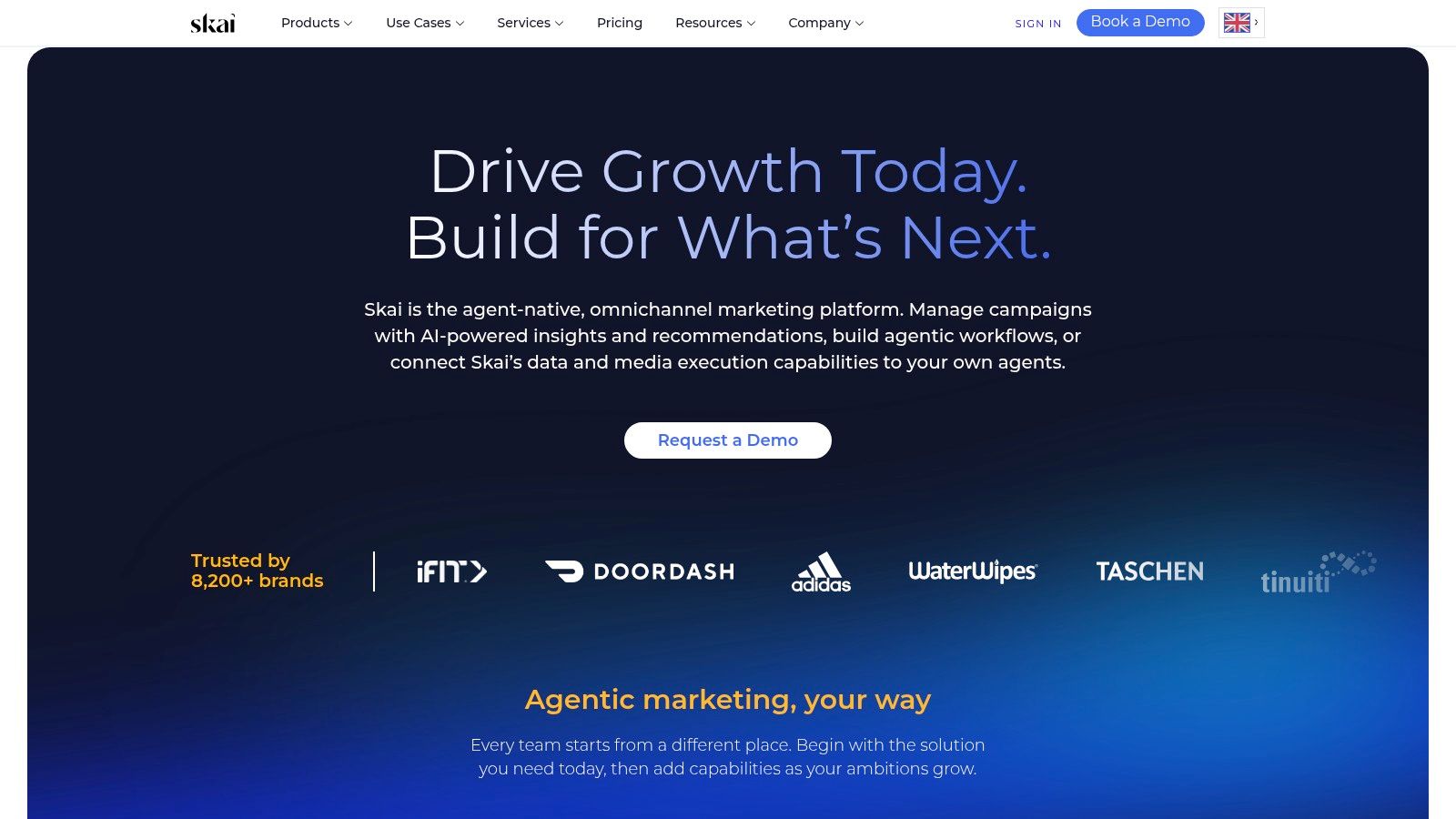
Search, social, and retail media create a different coordination problem from search alone. Skai is aimed at larger advertisers and agencies managing that broader paid-media mix, with cross-channel campaign operations, performance insights, planning, and automation.
Its appeal is operational consolidation. Teams can evaluate whether shared workflows reduce the need to move between separate platform interfaces while preserving the channel-specific controls specialists need. Broad coverage is useful only if the actions your buyers perform are supported.
Make the demonstration account-specific
Ask for a workflow that spans your real channels, not a generic dashboard tour. For example, have the provider show how a planner reviews budget pacing, how a buyer implements an adjustment, and how the team inspects the resulting change record.
- Best fit: Organizations with a complex paid-media mix and dedicated platform owners.
- Buying friction: Quote-based pricing makes early cost comparisons less straightforward.
- Implementation concern: Onboarding, permissions, reporting definitions, and specialist training need explicit ownership.
Skai offers a sales-led demo and consultation path. Use that process to establish integration depth, service responsibilities, and the boundaries between platform support and your internal team's work.
An AI-assisted layer may still help investigate connected data, but it won't substitute for enterprise planning or standardized media operations. Choose Skai when those coordinated workflows justify a platform commitment, not because the channel list is longer.
9. Smartly
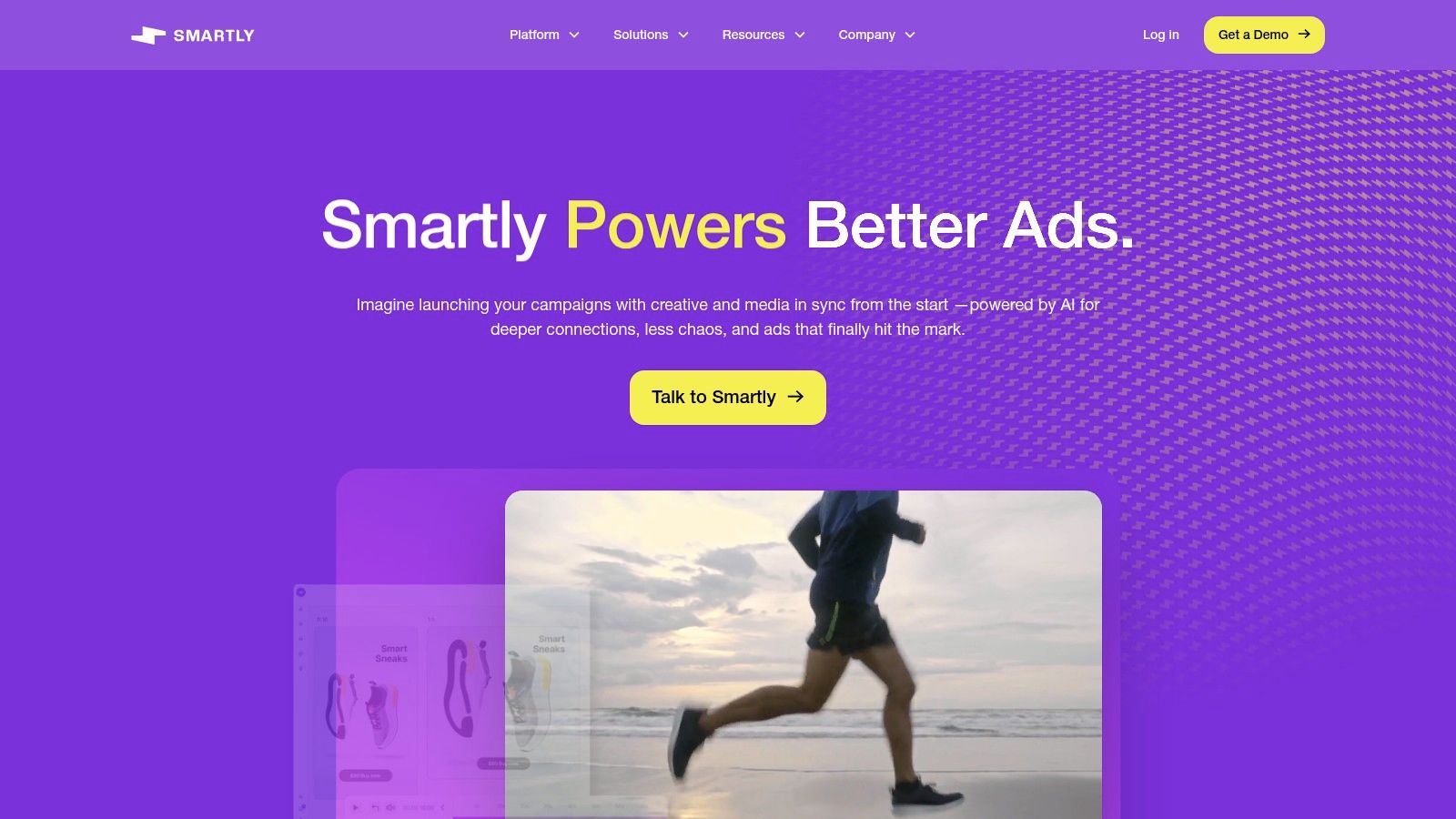
Smartly makes the most sense when creative production and campaign execution are tightly linked. Brands and agencies managing substantial variation across products, audiences, and accounts need more than budget controls. They need a reliable way to adapt assets, launch them, and keep media and creative teams coordinated.
Smartly combines creative templating, feed-based automation, bulk campaign workflows, and tools for adapting and testing creative variations. That operating model differs from a search optimizer or an AI diagnostic layer: the core challenge is moving approved creative into advertising workflows at scale.
A faster launch process only helps if the team can verify the asset, destination, audience, and product information before publishing.
During evaluation, use a representative product feed or creative brief. Follow the work through template setup, variation creation, review, and campaign launch. Ask how the team handles an incorrect product attribute or a rejected asset without rebuilding the entire workflow.
- Strong fit: Social-heavy organizations with substantial creative variation and coordinated production teams.
- Potential mismatch: Small advertisers whose main problem is occasional account optimization.
- Buying requirement: Confirm channel coverage, onboarding responsibilities, and commercial terms directly.
Smartly is sales-led, with no simple public subscription price available. Its value depends on whether the connected creative-and-media process replaces meaningful manual work.
Don't buy it for creative volume alone. Buy it when your team needs a repeatable production-to-launch system.
10. AdEspresso
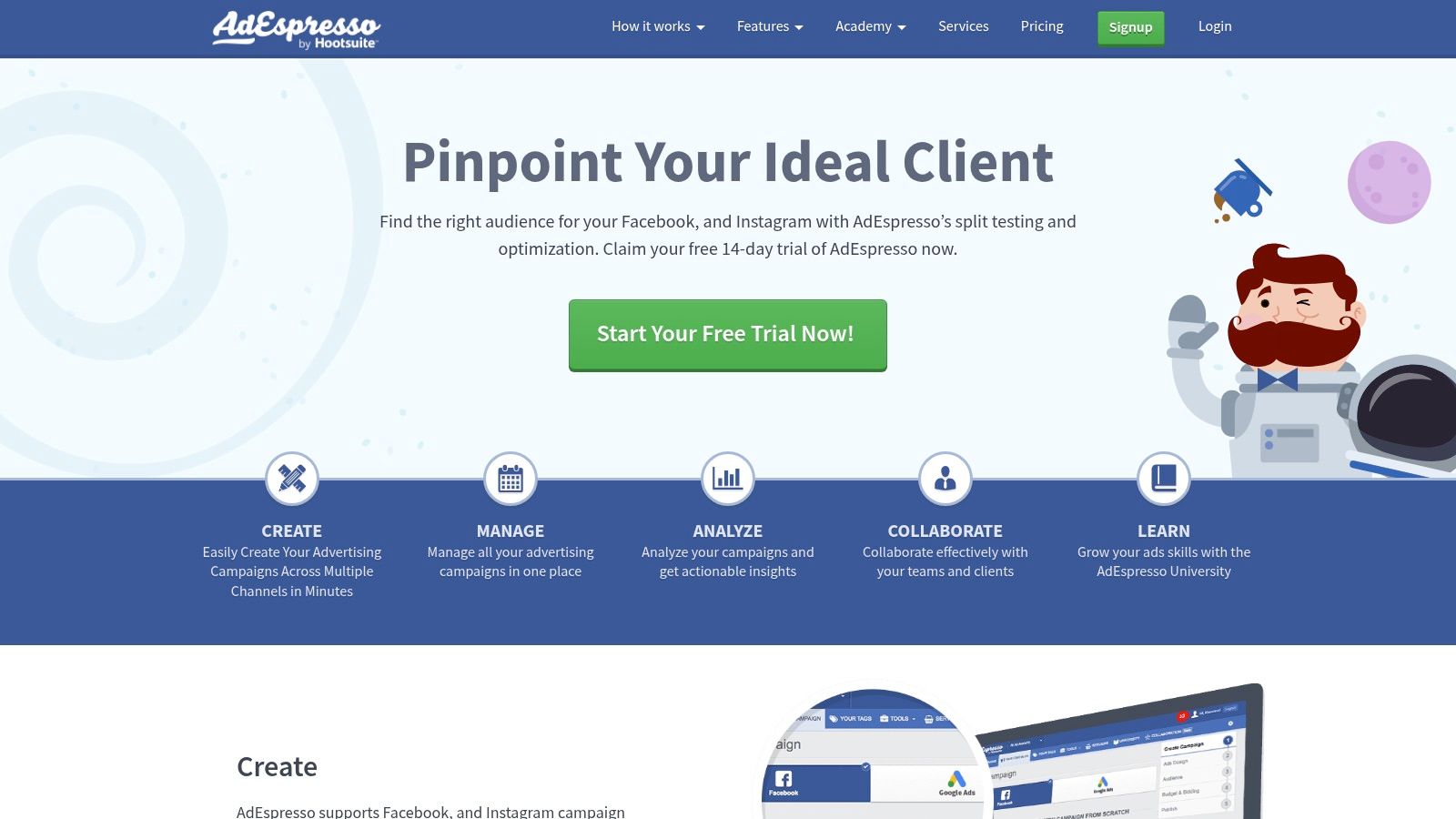
AdEspresso is a focused option for teams creating, testing, and managing Facebook and Instagram campaigns. Its scope is narrower than enterprise media platforms, which can be helpful when an agency needs a clear Meta workflow rather than broad operational consolidation.
Campaign creation and analytics sit alongside capabilities such as bulk creation, performance triggers, approvals, and client-facing reporting, depending on the plan. Approval and view-only access are particularly relevant when clients need visibility without direct editing responsibility.
Check the collaboration features you'll actually use
A small agency should test the complete approval handoff. Establish what the client sees, how requested changes return to the buyer, and whether reporting access can be separated from campaign-editing access. A feature label doesn't prove that the workflow matches your service model.
- Useful fit: Meta-focused testing and management with agency-client collaboration needs.
- Scope limitation: It isn't a combined Google Ads and Meta campaign manager.
- Plan consideration: Spend limits, seats, reporting access, and advanced features affect the appropriate tier.
AdEspresso publishes tiered plans and offers a trial path. Confirm which tier includes your required collaboration and reporting functions before comparing its cost with other options.
Choose it when a focused Meta interface makes day-to-day work clearer. If the persistent problem is reconciling Google, Meta, analytics, and CRM outcomes, you'll still need another process or complementary layer for that investigation.
How the leading campaign management platforms compare on price, free access, coverage, and best fit
Pricing structure matters more than the entry figure. Flat tiers keep costs predictable, spend-based pricing scales the fee with your budgets, and quote-based platforms bundle implementation into a negotiated contract.
| Item | Starting price | Free option | Platforms covered | Best for |
|---|---|---|---|---|
| NotFair (recommended) | Free; Growth at $99/mo monthly, or $950/yr (~$79/mo) annually | Yes, 300 operations/month after a 7-day unlimited trial | Google Ads, Meta Ads, X Ads, LinkedIn Ads; Search Console, GA4, GoHighLevel | AI-assisted marketing workflows with approval-gated changes |
| Optmyzr | Spend-based tiers | Free trial | Google Ads, Microsoft Ads, Amazon Ads, Meta Ads, LinkedIn Ads | PPC optimization and campaign management across channels |
| Adzooma | Free plan; flat paid tiers | Yes, permanent free plan | Google Ads, Meta Ads, Microsoft Ads | Cross-account PPC monitoring and audits |
| Madgicx | Tiered plans that scale with ad spend | Free trial | Meta Ads, Google Ads; reporting connections include GA4, Shopify, TikTok, Klaviyo | Meta-focused ecommerce advertising |
| Bïrch (formerly Revealbot) | Spend-based tiers | Free trial | Meta, Google, TikTok, Snapchat | Repeatable ad automation workflows |
| Adalysis | Spend-based tiers with a pricing calculator | Free trial | Google Ads, Microsoft Ads | Search-account diagnostics and optimization |
| Google Search Ads 360 | Quote-based | No standard free option listed | Supported search engines and Google Marketing Platform | Enterprise-scale search campaign management |
| Skai | Quote-based | No free option listed | Search, social, retail media | Enterprise cross-channel media management |
| Smartly | Quote-based | No free option listed | Paid social platforms with creative workflow tooling | High-volume social campaigns and creative workflows |
| AdEspresso | Published tiered plans | Free trial | Facebook and Instagram | Meta campaign creation, testing, and collaboration |
Read the free column carefully before comparing. A permanent free tier, like Adzooma's plan or NotFair's 300 monthly operations, supports ongoing light use and works well for evaluation on live accounts. A time-limited trial only proves the workflow, so plan a real wasted-spend investigation during the window rather than a passive tour.
Matching the Tool to Your Team, Not the Feature List
Start with the bottleneck. If Google and Meta data sit in separate tabs and nobody can explain a performance change, a cross-platform suite or an AI-assisted layer such as NotFair may be the most useful addition. If buyers already understand the problem but keep repeating the same actions, dedicated automation deserves priority.
For Google-first search teams, compare Optmyzr and Adalysis against the specific review work specialists perform. Adzooma is worth considering when account monitoring is the immediate gap. Meta-heavy ecommerce teams should distinguish Madgicx's broader buying and creative workflow from Bïrch's rule-based automation and AdEspresso's focused campaign-management approach.
Enterprise buyers face a different decision. Search Ads 360 fits coordinated search operations, Skai addresses a broader paid-media mix, and Smartly connects creative production with campaign execution. Budget for implementation and expect a sales process rather than treating these as interchangeable self-serve subscriptions.
Run a real operational test
Use your own accounts to investigate a genuine wasted-spend issue. Ask the tool to expose the relevant evidence, show its proposed action, and make the approval path clear. Then verify the outcome in the native platform.
- Reconcile the signal: Compare platform conversions with GA4 and CRM outcomes, accounting for reporting delays and incomplete pipeline stages.
- Verify permissions: Check who can inspect data, propose edits, approve actions, and operate across client accounts.
- Test recovery: Confirm which changes can be reversed, what restoration includes, and which actions require manual recovery.
Don't automate a disputed outcome signal. If advertising platforms report improving conversions while qualified pipeline deteriorates, investigate tracking, attribution, lead quality, and data freshness before changing budgets. Software can accelerate access to evidence; it can't make incomplete CRM records reliable.
Governance deserves equal attention. A survey of marketing-technology buyers reported by Stensul through Business Wire found that 53% of organizations lacked AI governance for campaign creation. Approval gates and change history belong in the buying criteria, not in a later implementation discussion.
Finally, decide what stays. An MCP-hosted layer can complement an existing optimizer by helping investigate live data and prepare supported edits, but it won't replace creative production, enterprise planning, or every native campaign control. Choose the smallest stack that completes your real workflow, then expand only when a demonstrated limitation justifies another tool.
NotFair connects compatible AI assistants to advertising, analytics, search, and CRM accounts for live campaign diagnosis and approval-gated changes. Visit NotFair to check your required integrations, investigate a real wasted-spend issue, and test edit previews and supported undo before expanding your workflow.